1%
1% better every day
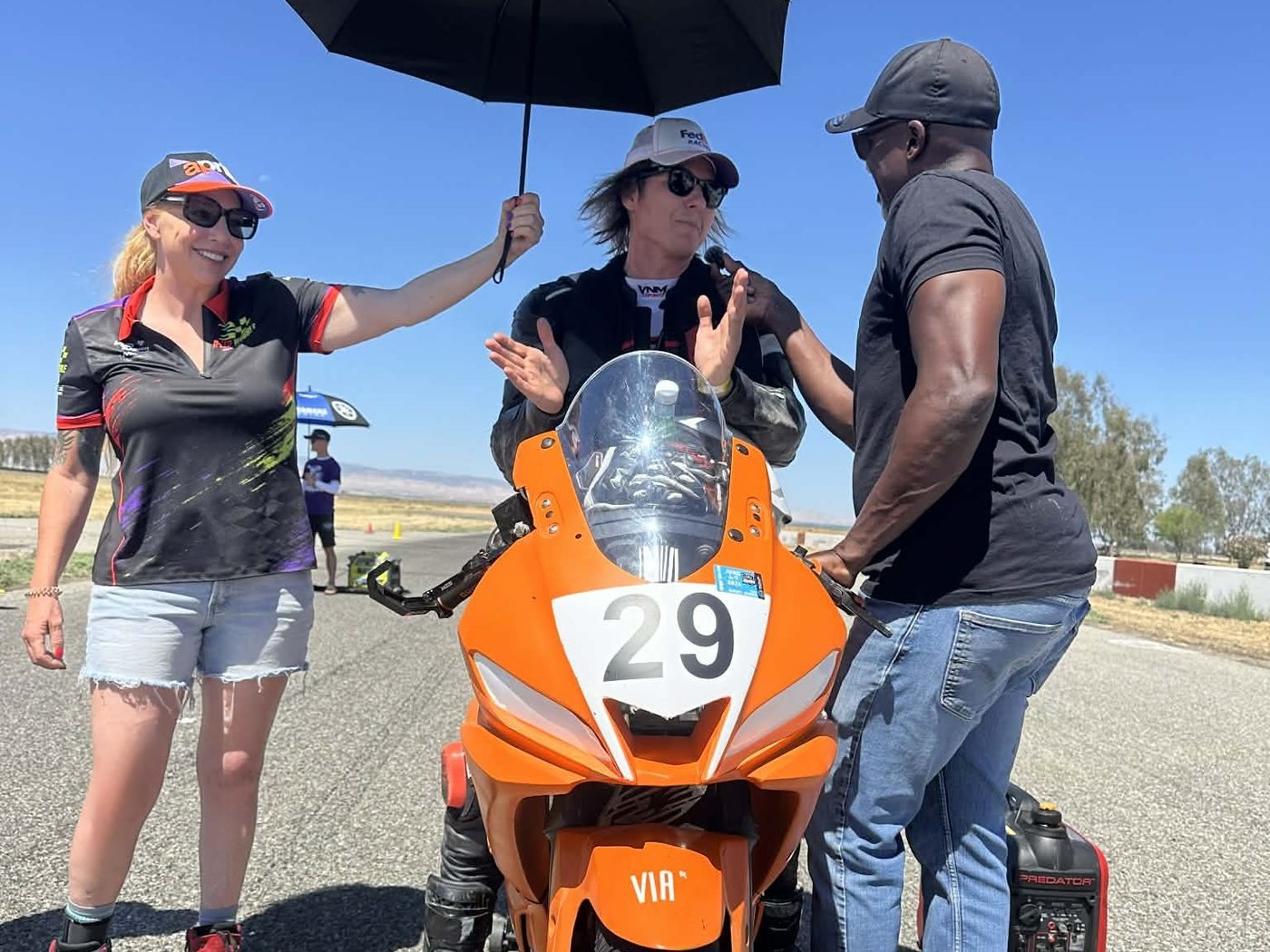
The 30 days before the finale: running the track, seat time, no wine, and the morning routine.
The road to MotoAmerica.
Two Expert racers. Two new twins. One goal: qualify for the 2027 Twins Cup at Laguna Seca.
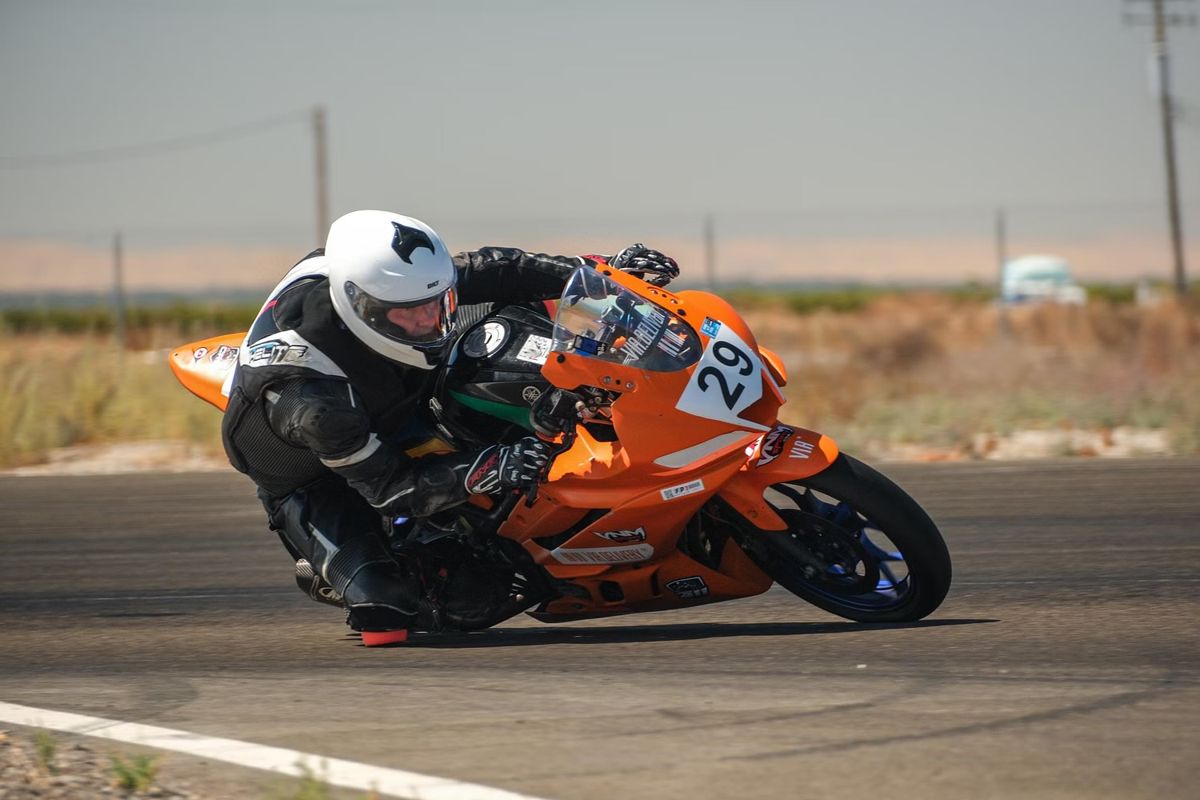 #29 / Mitchell Nikitin
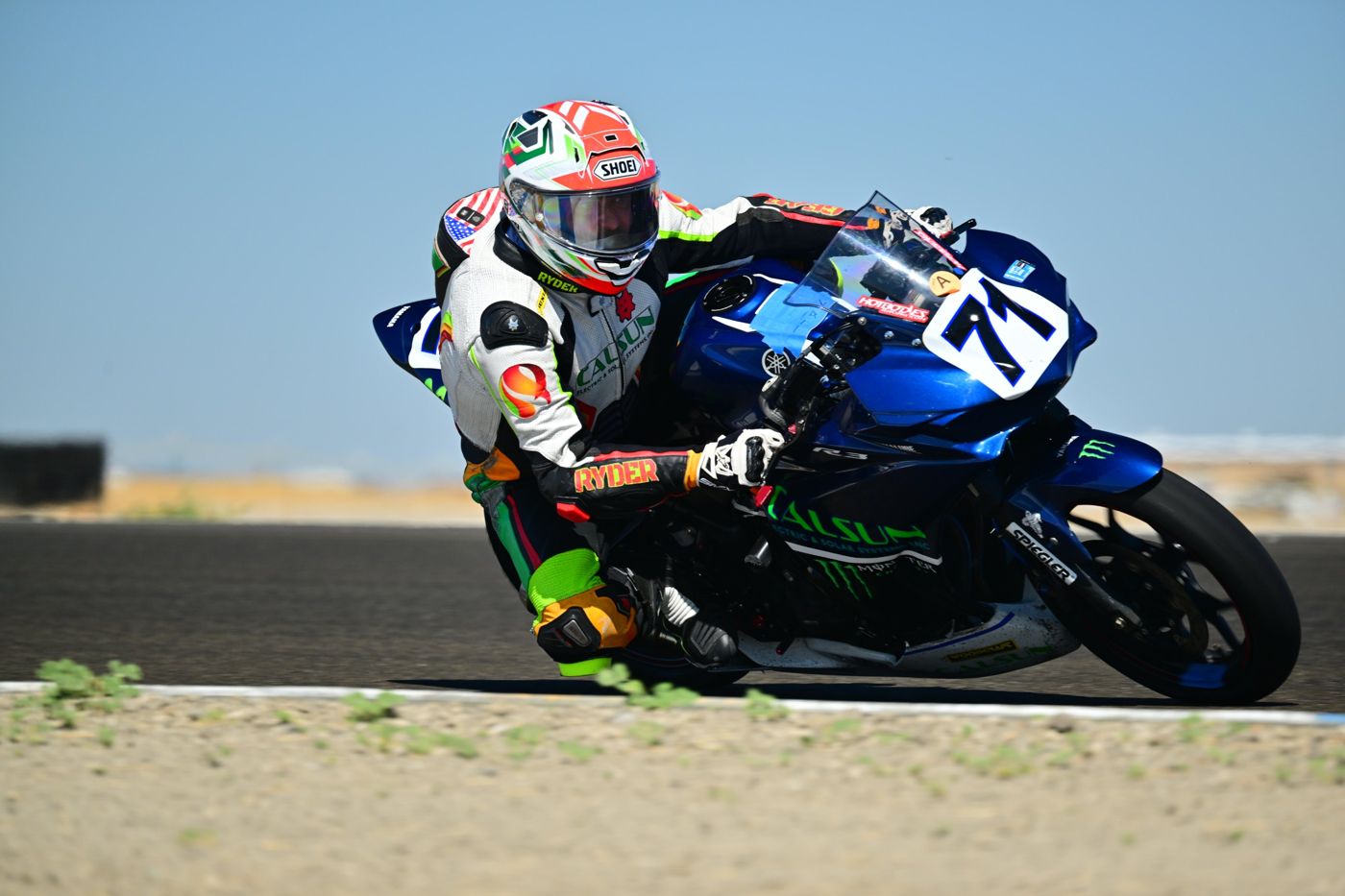 #71 / Chad Stern
2026 CRA season, #29 and #71 combined: #29 won both Expert 300 titles (3 wins, 14 podiums), #71 added 1 win and 7 podiums.
On the grid with us



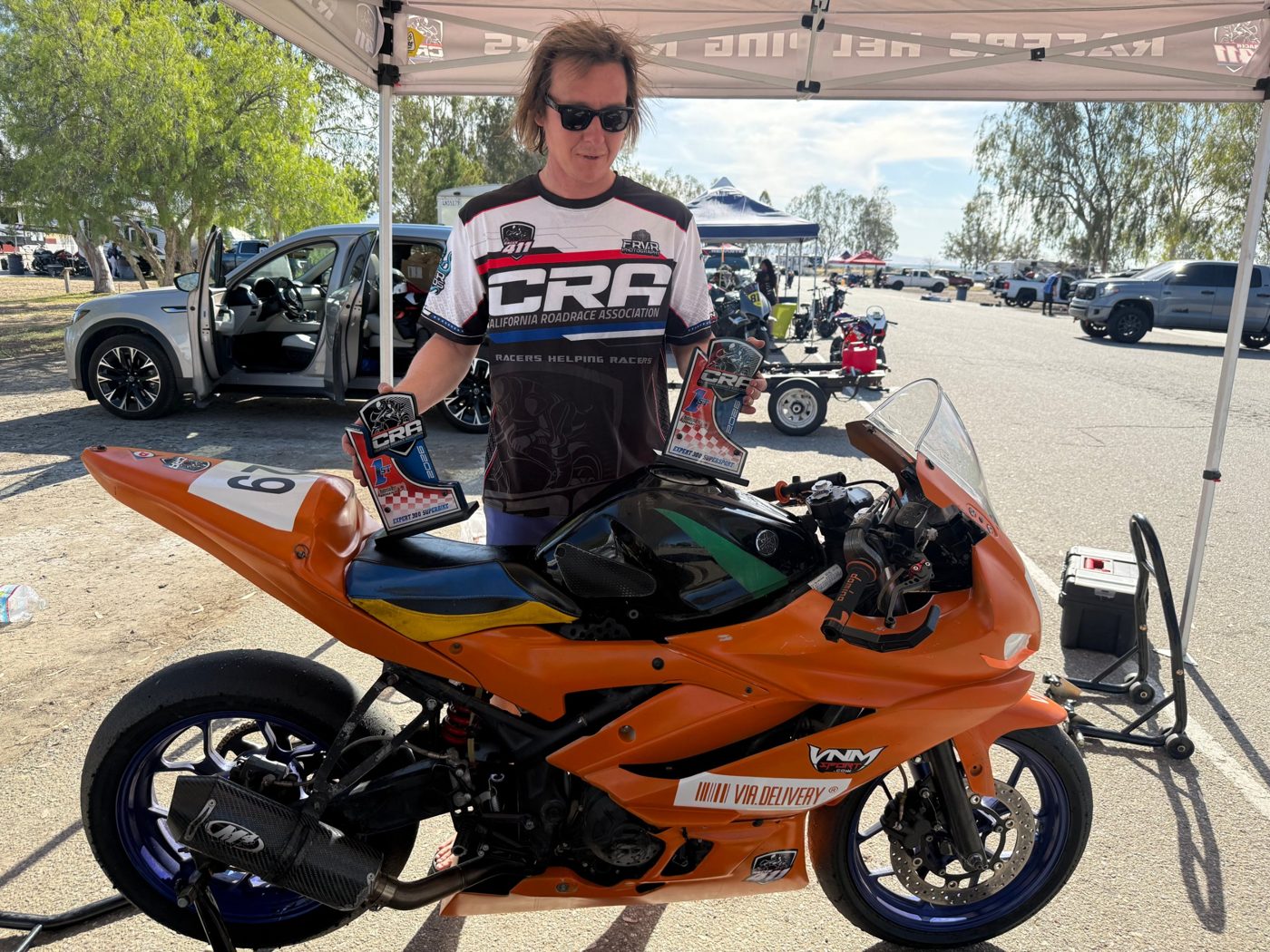
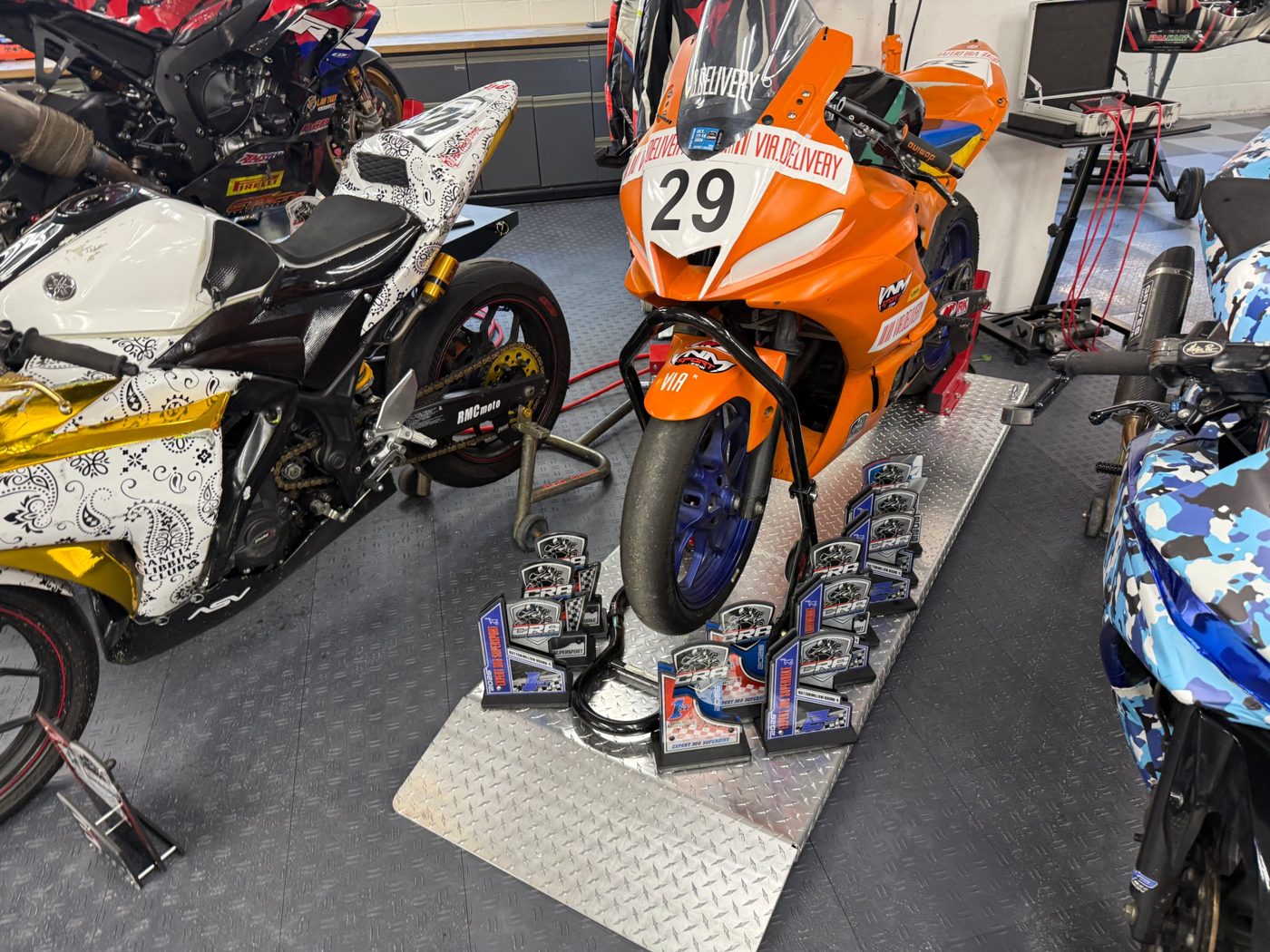
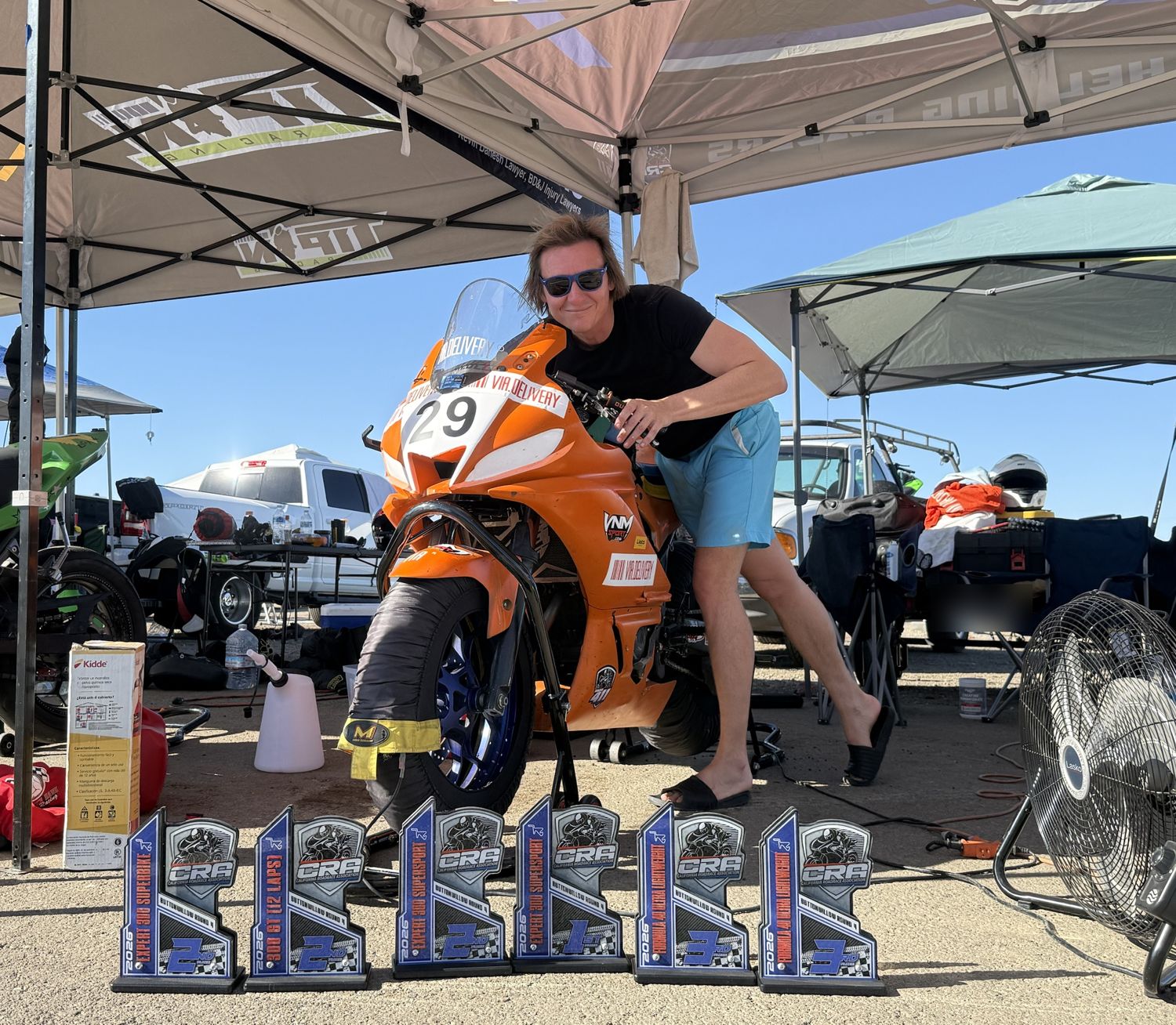
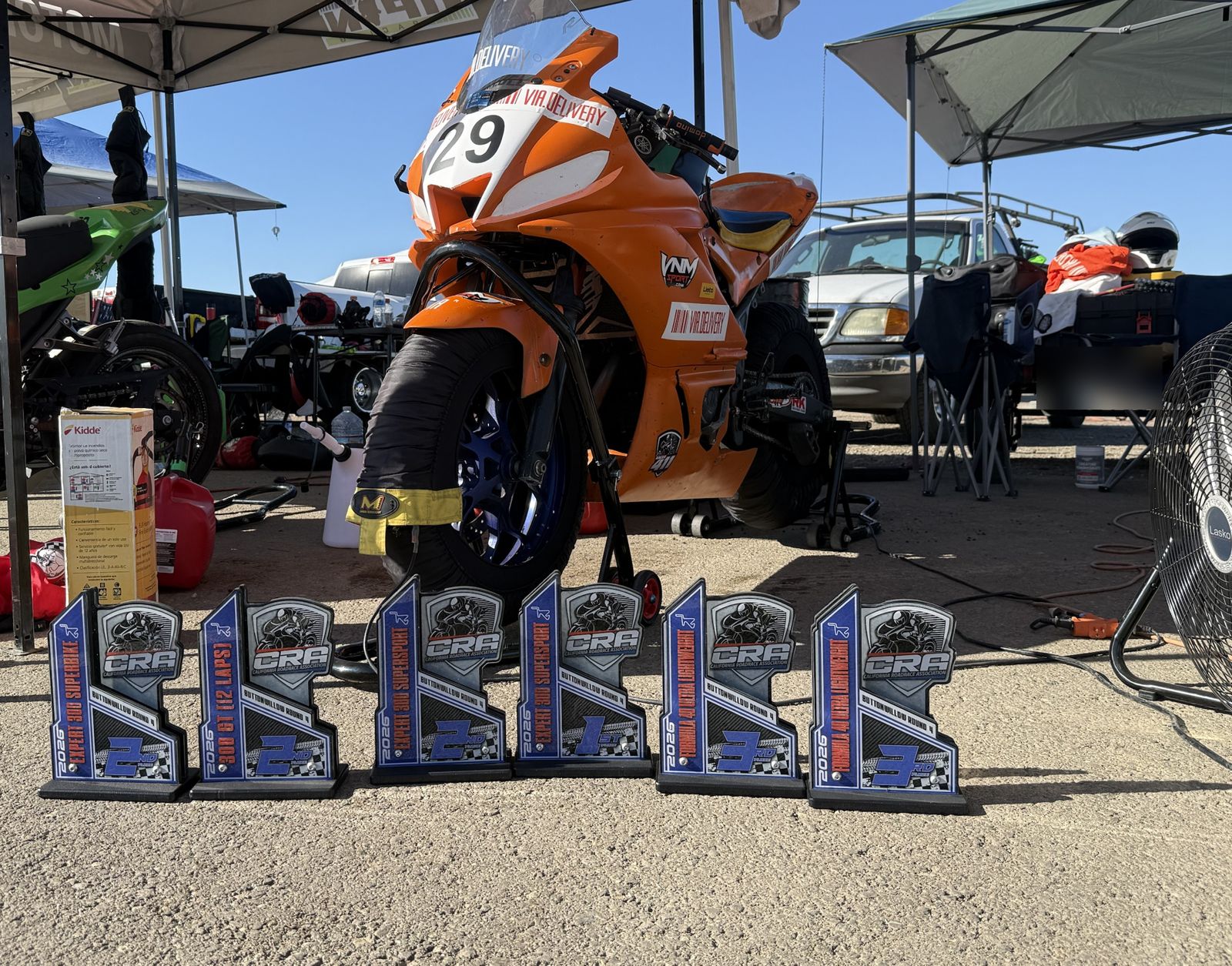 Round 4 / Six trophies
A last-lap double pass. Two Expert championships. The Buttonwillow finale that defined the season.
Read the race report →New bikes. A new class. The same commitment to getting faster.
Prepare the RS 660 and GSX-8R. Train through the off-season.
Race the twins at CRA and CVMA. Build six eligible Expert weekends.
Aim to qualify for the MotoAmerica Twins Cup at Laguna Seca in July 2027.
Two riders. A season of stories. Come along for the ride.
Two CRA Expert titles, podiums in two more classes, 3 wins and 14 podiums overall. All on a 2016 Yamaha R3.
| Class | Championship | Points | Races |
|---|---|---|---|
| Expert 300 Supersport | 1st of 12Champion | 208 (2nd: 190) | 2 wins, 7 podiums in 8 races |
| Expert 300 Superbike | 1st of 12Champion | 101 (2nd: 100) | 1 win, 4 podiums in 4 races |
| 300 GT | 2nd of 21 | 78 | 2 podiums in 4 races |
| Formula 40 Ultra Lightweight | 3rd of 19 | 119 | 1 podium in 8 races |
| Class | Championship | Points | Races |
|---|---|---|---|
| Expert 300 Supersport | 3rd of 12 | 113 | 4 podiums in 5 races, all from Round 2 on |
| 300 GT | 3rd of 21 | 69 | 1 podium in 4 races |
| Formula 40 Ultra Lightweight | 5th of 19 | 69 | best finish 4th |
| Amateur 300 Supersport | 7th of 11 | 41 | 1 win, 2 podiums in 3 races, then promoted to Expert |
| Ultra Lightweight GP | 9th of 27 | 34 | best finish 6th |
Team result: Chad Stern (#71) finished 3rd in Expert 300 Supersport and 3rd in 300 GT, so the future teammates went 1–3 in Supersport and 2–3 in GT. Chad moved up to Expert during the season and scored no Expert points in the opening round, so 3rd overall is a big step.
He arrived leading both Expert championships. With double points, his rival could still take both.
Passed his rival and led for about four laps until the right clip-on came loose. Finished 2nd. Now he had to beat his rival at least once.
Wheelied off the start and lost places. Four laps stuck behind a 400 that was quicker down the straights. Passed it, chased down the leader, and made a double pass around a backmarker on the last lap. Led from Turn 4 to the flag. Won by 0.538 s.
2:01.908 and 2:01.470, his fastest laps ever, and faster than the class lap record CRA listed (2:02.425, Oct 2025).
Finished 2nd behind his rival. Enough for the Superbike title, 101 to 100.
Higher is faster. Times from CRA official timing; Sunday's race results were provisional when recorded.
For about 30 days before the finale, the goal was to get 1% better every day: fitness, training, technique and the bike. A year earlier he had walked up to the fastest rider in the class and asked to be coached. That rider became his main title rival. The principle: find someone who has already been where you want to go, and ask them to teach you.
A lighter race suit. It saved about 2 kg but restricted movement, so he raced in the old one.
| Season | # | Class | Championship | Points | Race results |
|---|---|---|---|---|---|
| 2026 | 29 | Expert 300 Supersport | 1st of 12 | 208 | 2 wins, 7 podiums in 8 races |
| 2026 | 29 | Expert 300 Superbike | 1st of 12 | 101 | 1 win, 4 podiums in 4 races |
| 2026 | 29 | 300 GT | 2nd of 21 | 78 | 2 podiums in 4 races |
| 2026 | 29 | Formula 40 Ultra Lightweight | 3rd of 19 | 119 | 1 podium in 8 races |
| 2025 | 949 | Expert 300 Supersport | 4th of 9 | 115 | 8 podiums in 10 races |
| 2025 | 949 | Expert 300 Superbike | 4th of 9 | 43 | 3 podiums in 5 races |
| 2025 | 949 | 300 GT | 7th of 16 | 35 | best finish 3rd |
| 2024 | 929 | Amateur 300 Superbike | 2nd of 13 | 47 | 2 podiums in 3 races |
| 2024 | 929 | Amateur 300 Supersport | 5th of 14 | 16 | 2 podiums in 3 races |
| 2024 | 929 | 300 GT | 6th of 14 | 32 | best finish 3rd |
| 2024 | 929 | Formula 40 Ultra Lightweight | 6th of 35 | 46 | best finish 5th |
| Season | Class | Championship | Points | Race results |
|---|---|---|---|---|
| 2026 | Expert 300 Supersport | 3rd of 12 | 113 | 4 podiums in 5 races, all from Round 2 on |
| 2026 | 300 GT | 3rd of 21 | 69 | 1 podium in 4 races |
| 2026 | Formula 40 Ultra Lightweight | 5th of 19 | 69 | best finish 4th |
| 2026 | Amateur 300 Supersport | 7th of 11 | 41 | 1 win and 1 other podium in 3 races, then promoted to Expert |
| 2026 | Ultra Lightweight GP | 9th of 27 | 34 | best finish 6th |
| 2025 | 300 Supersport Amateur | 2nd of 9 | 139 | 3 wins, 8 podiums in 10 races |
| 2025 | 300 GT | 4th of 16 | 61 | best finish 3rd, 5 starts |
| 2025 | Twins Grand Prix | 28th of 50 | 10 | one start, 6th |
| 2024 | Amateur 300 Supersport | 9th of 14 | 10 | debut, one start, 6th |
"Of N" counts every rider listed in that class's standings. Podiums are class finishing positions. Final 2026 standings are published by CRA about a month after the last round.
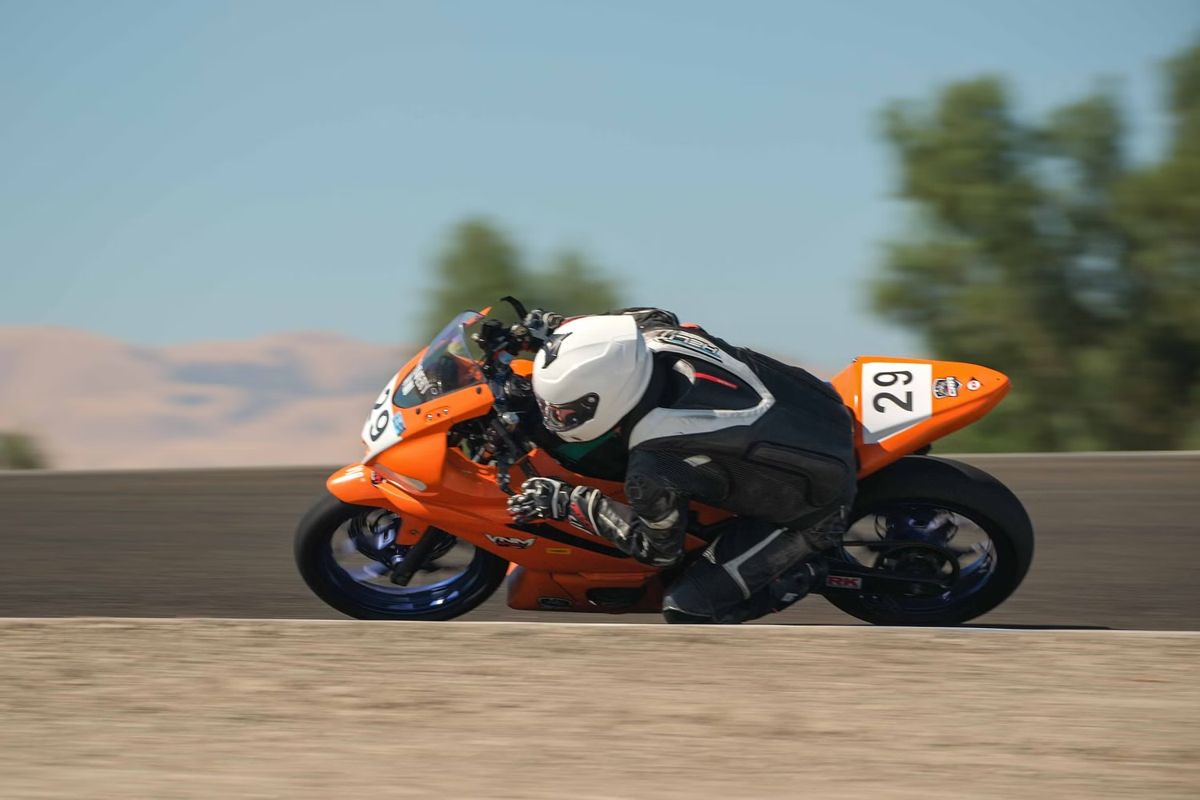
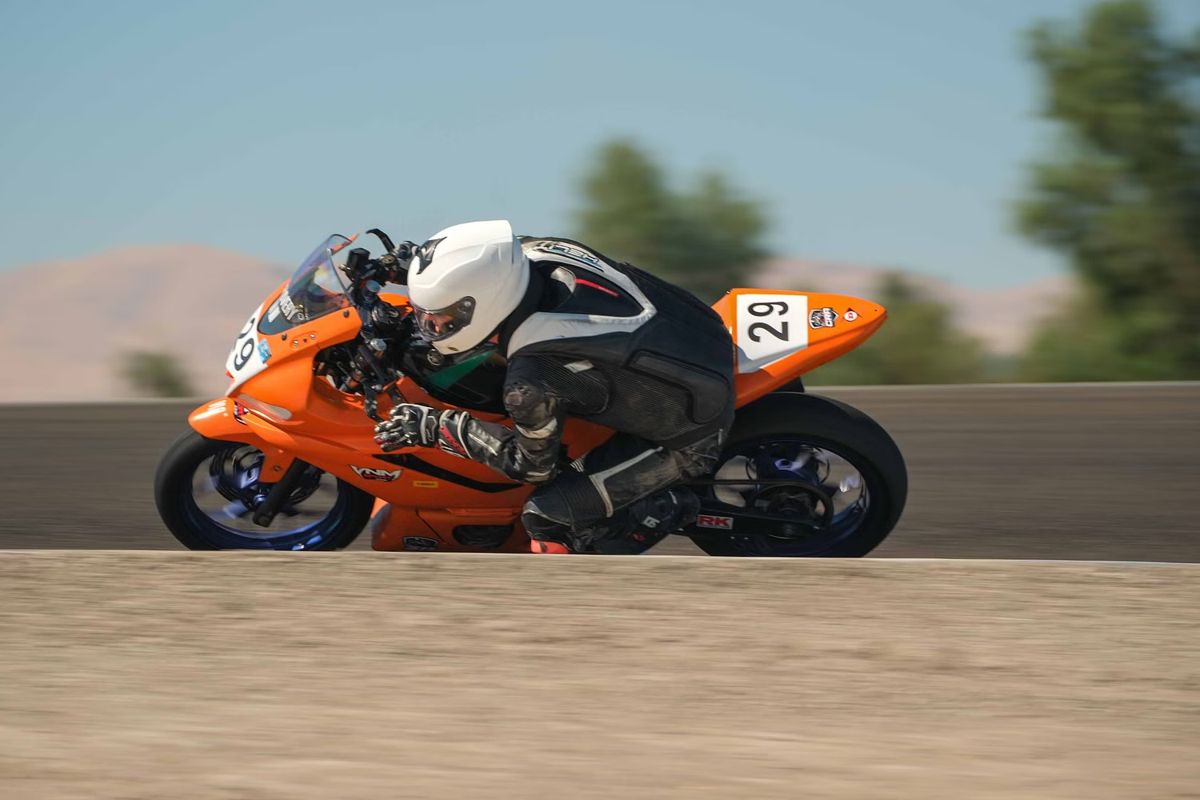
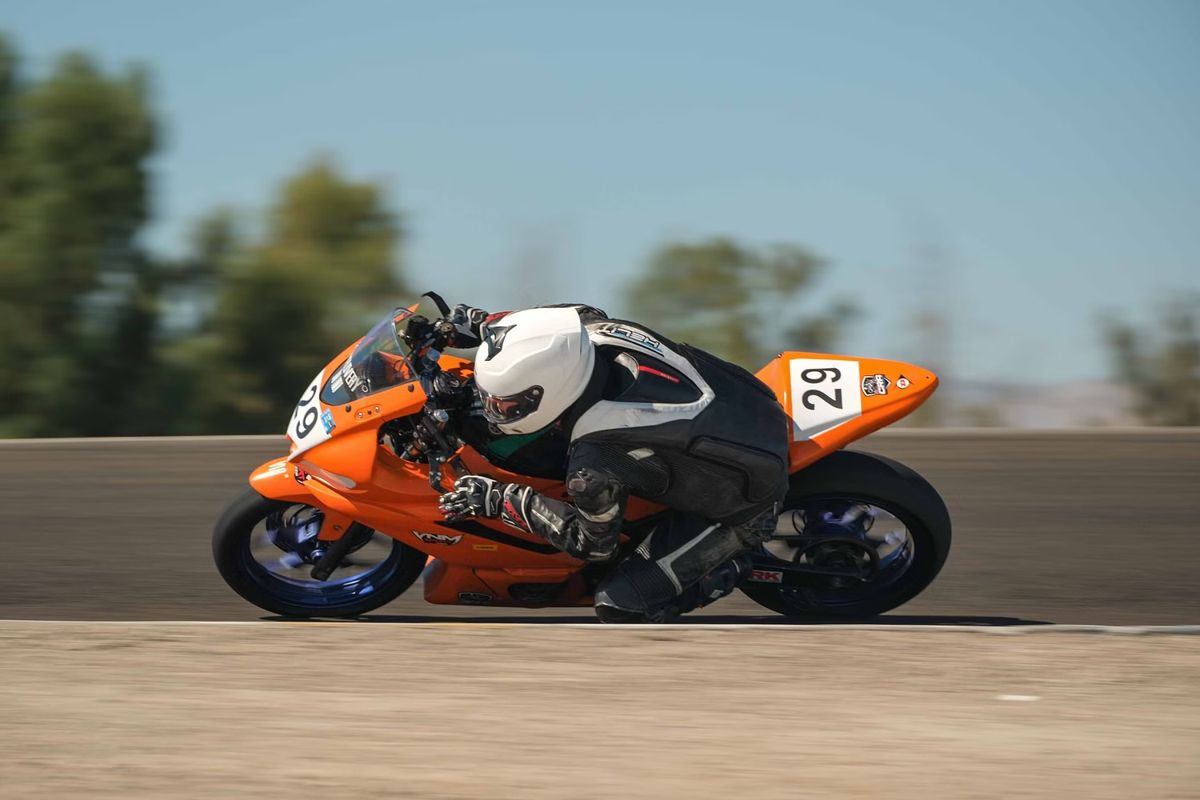
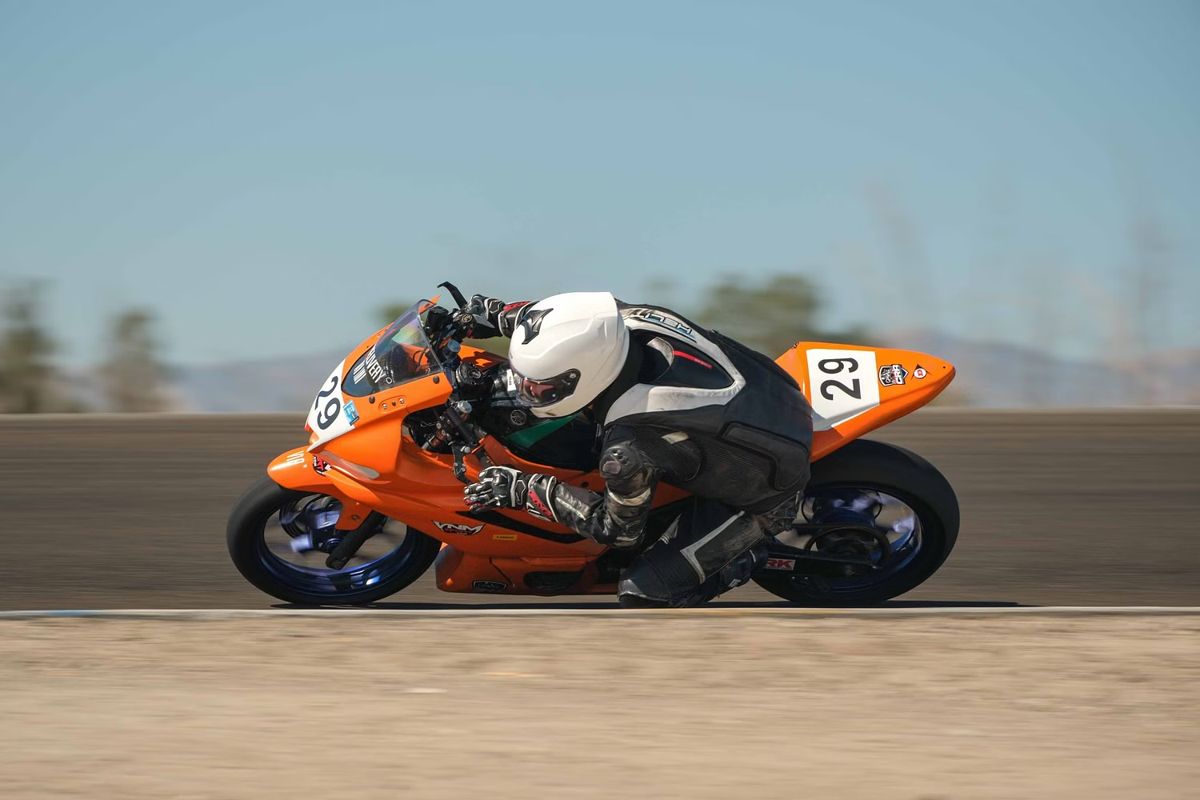
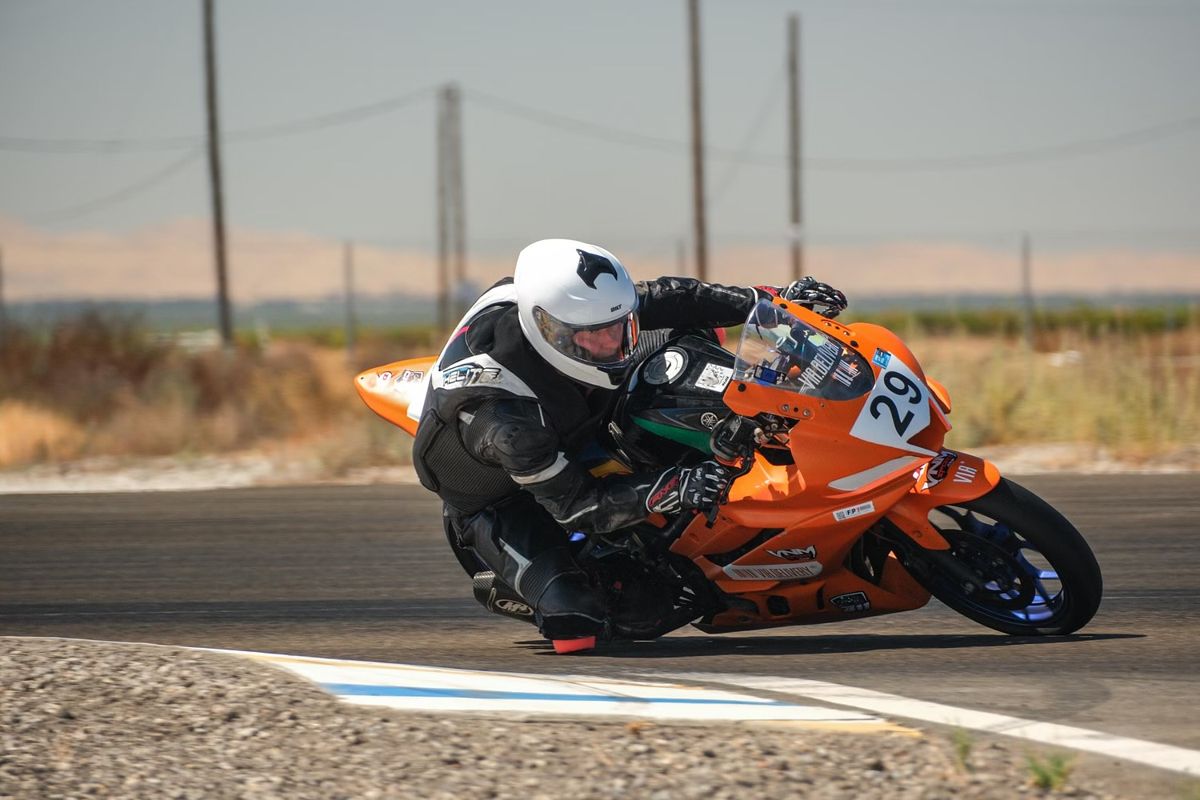
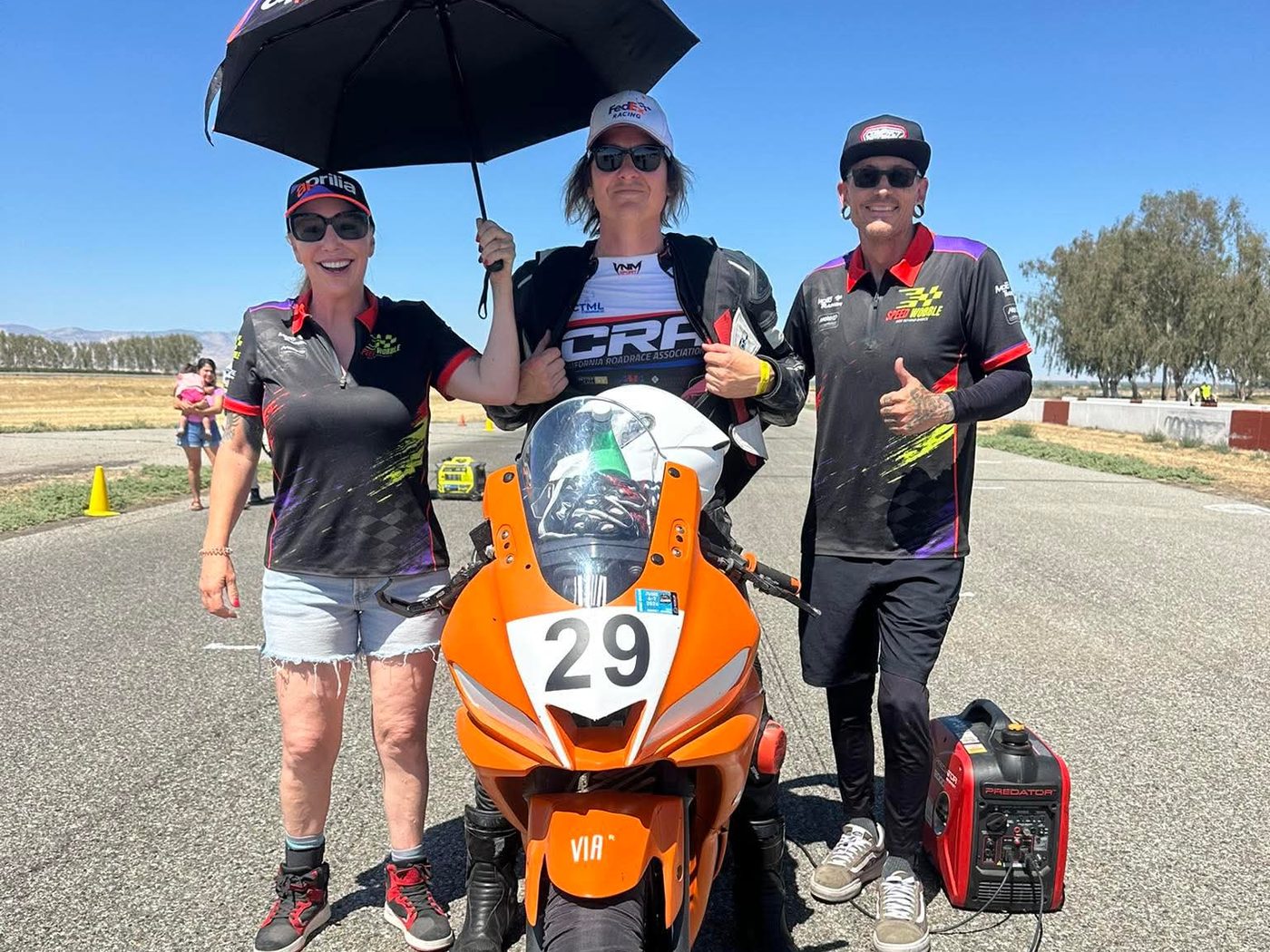
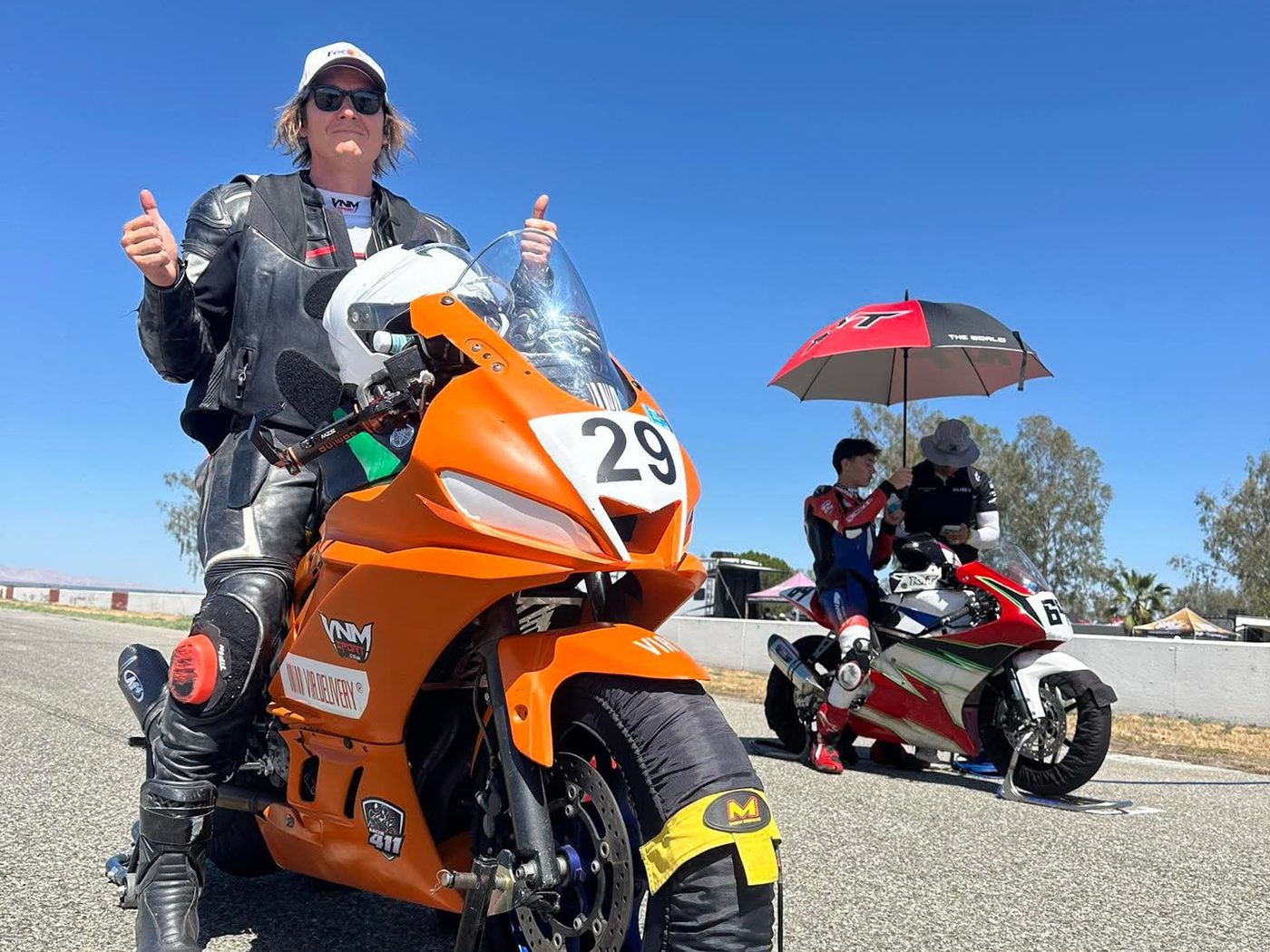
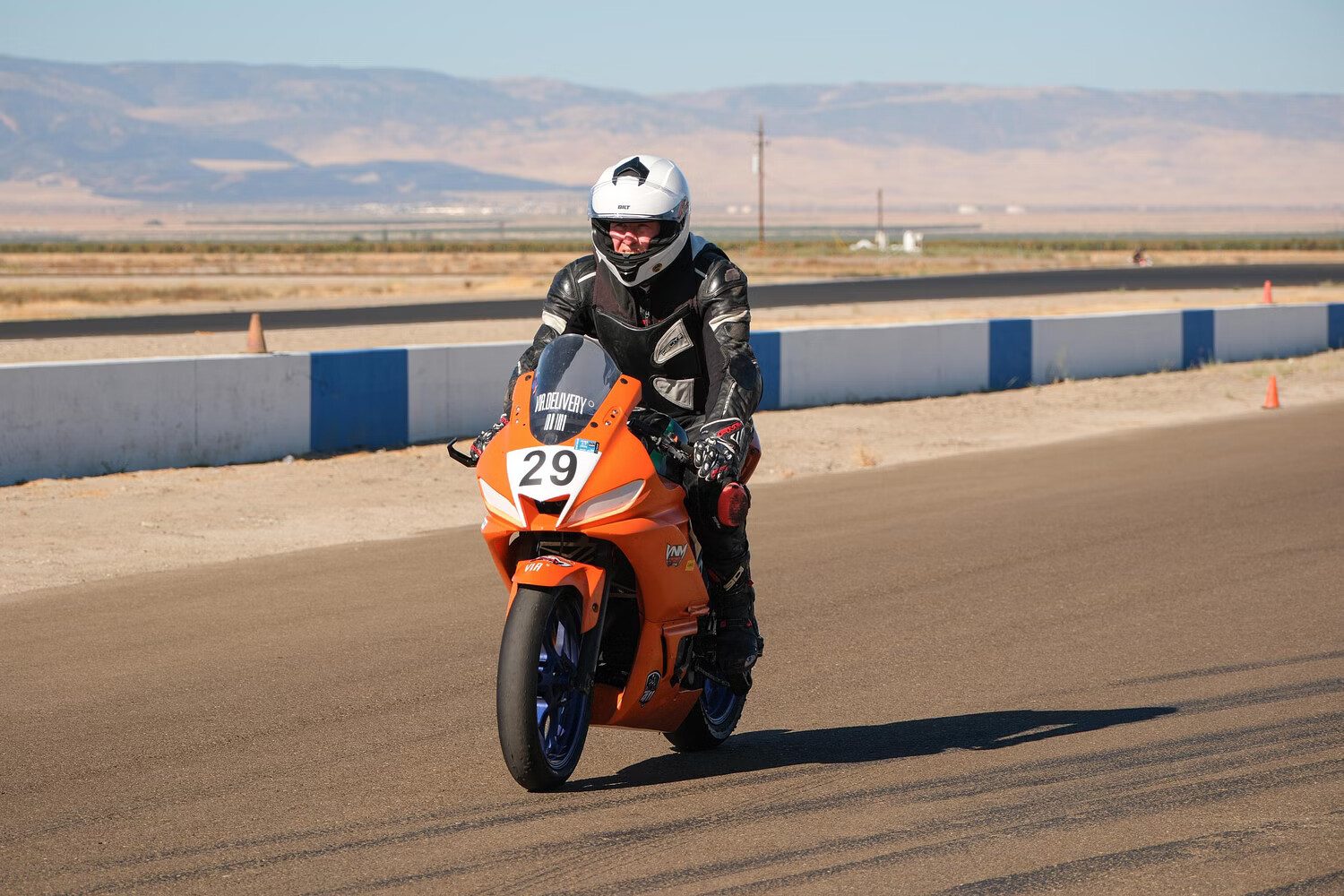
Two riders. A season of stories. Come along for the ride.
The goal for 2027: qualify both riders for the MotoAmerica Twins Cup round at WeatherTech Raceway Laguna Seca in July. It is an attempt, not a promise, and it starts with new bikes.
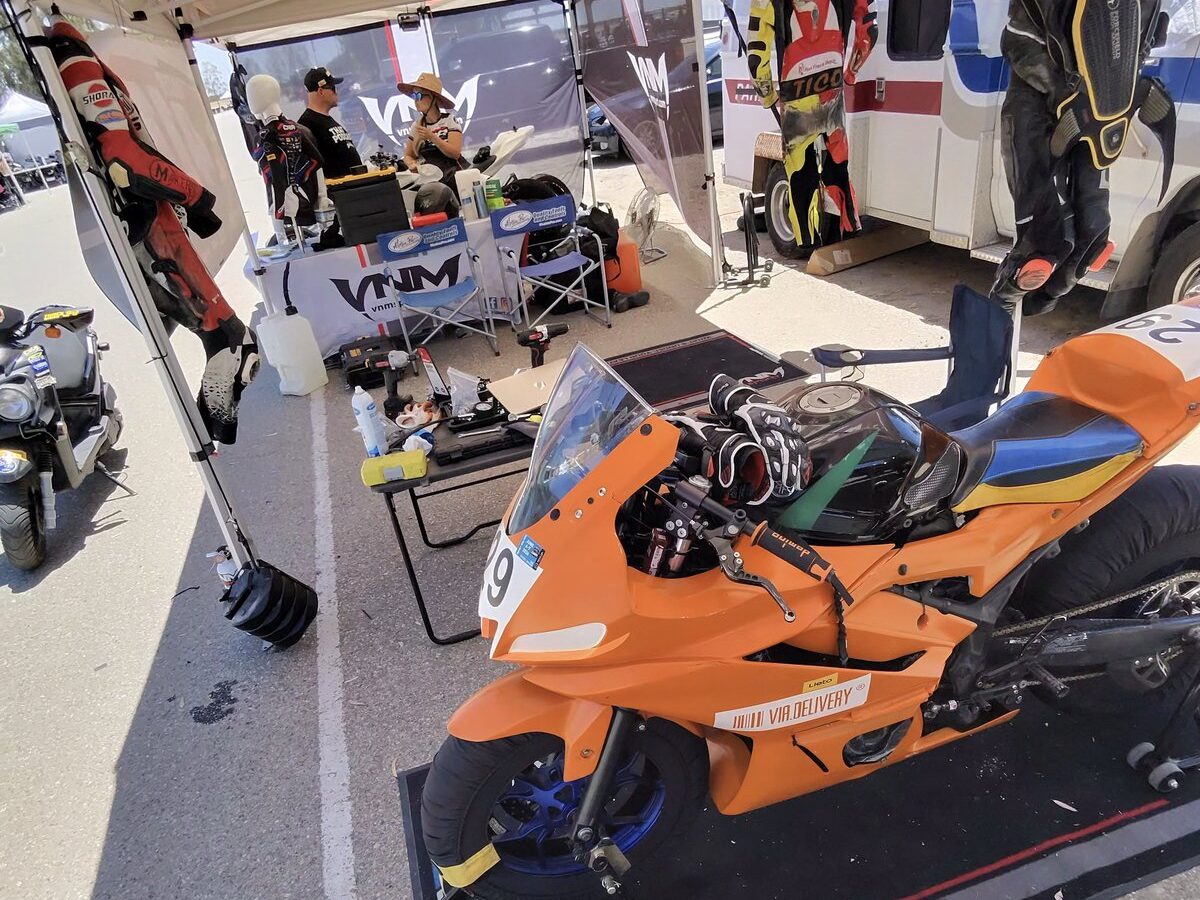
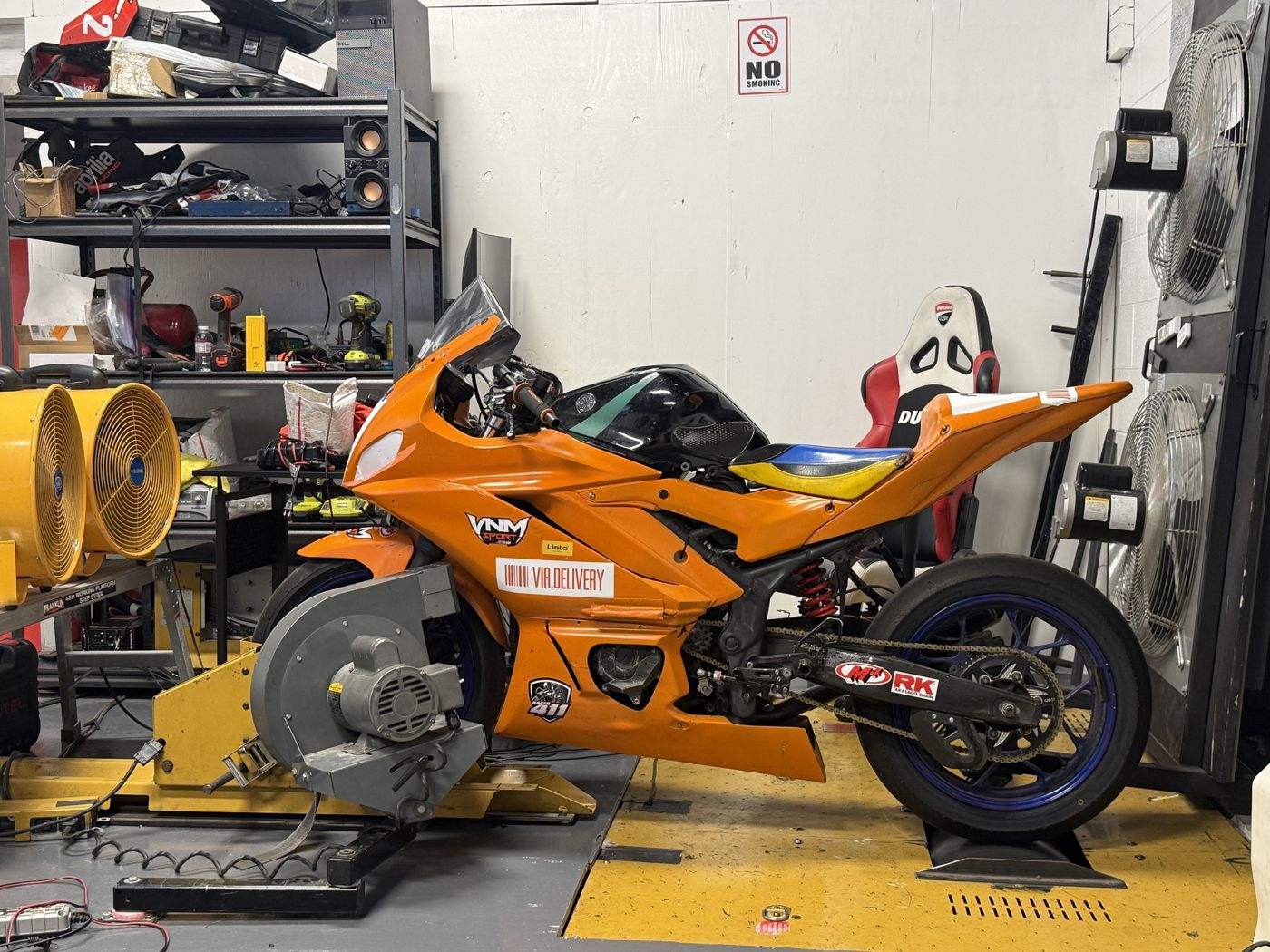
Both riders raced Yamaha R3s in 2026: #29 in orange, #71 in CalSun colors. In 2027 each moves up to a twin.
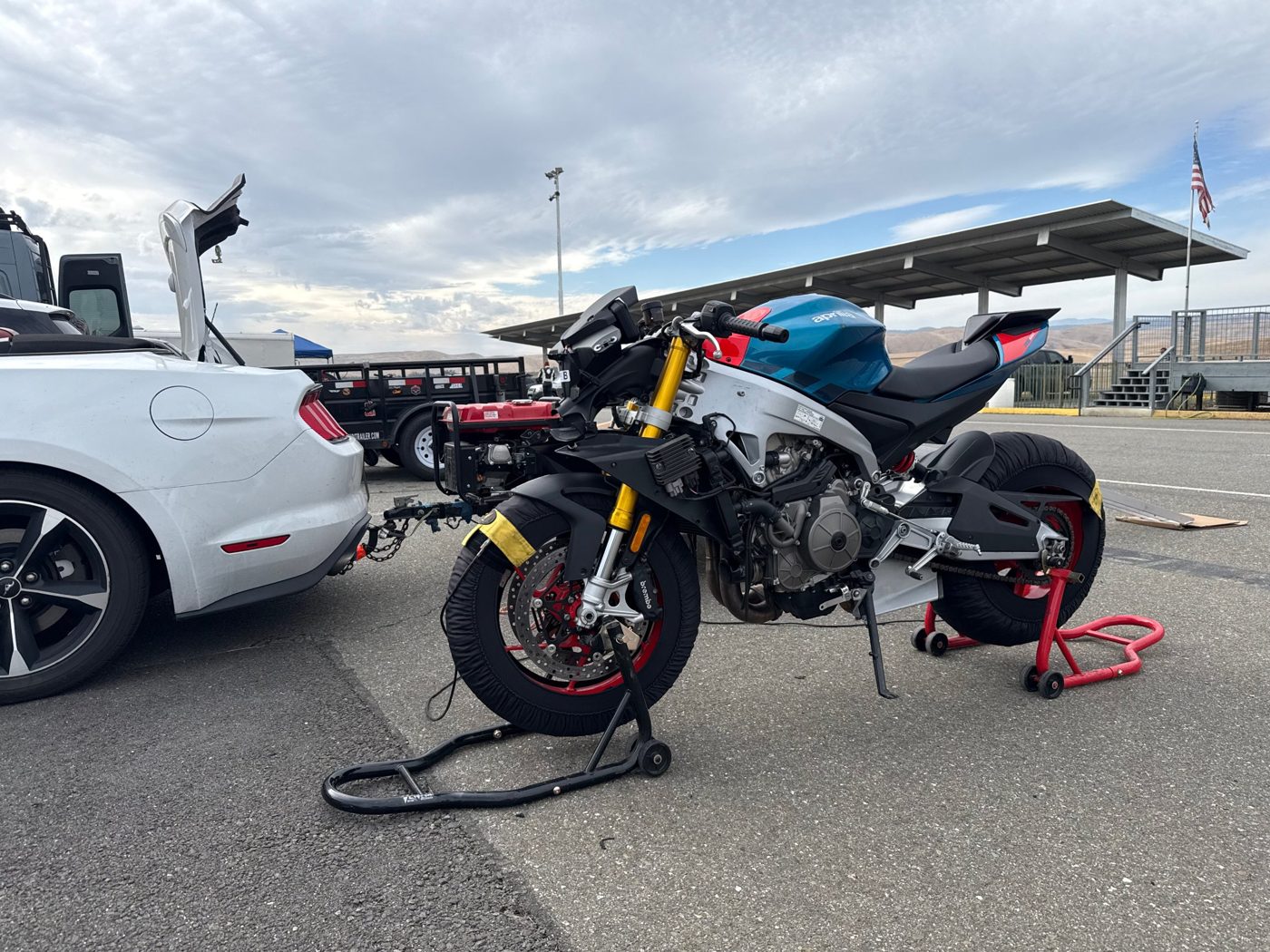
Build the RS 660. Dirt-bike days at off-road parks like Hollister Hills to learn rear-wheel slides. Conditioning.
CVMA Winter Series at Chuckwalla Valley Raceway and early CRA rounds at Buttonwillow.
MotoAmerica asks for six Expert race weekends on an eligible bike, certified by the club. They get built on the new bikes.
July 2027: attempt to qualify for the MotoAmerica Twins Cup round.
CRA and CVMA twins classes, start to finish.
What won 2026 was asking the fastest rider for help. For 2027 the search is on for a coach who is fast in the twins class and has raced MotoAmerica. If that's you, get in touch.
Two riders. A season of stories. Come along for the ride.
CalSun / Via.Delivery Racing is on the grid because of these companies. Thank you.
Solar, battery backup and electrical for homes, businesses and off-grid sites on California's Central Coast. Based in Paso Robles, home town of rider #71. Covers the team's 2027 race entry fees.
Via.Delivery ships online orders to pickup locations across the US, and uses racing in its own marketing.
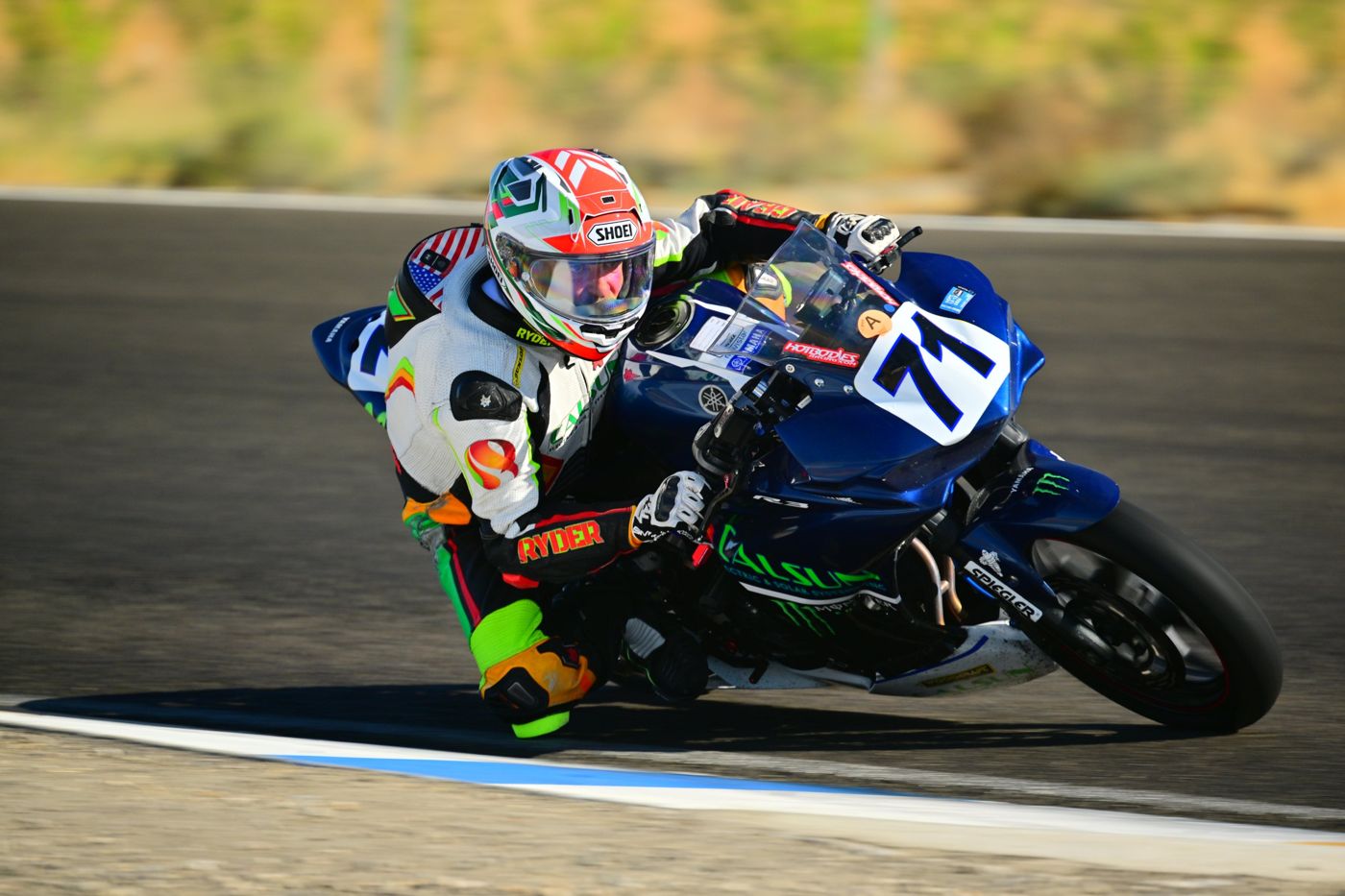 #71 / In CalSun colors
Built for power. Designed for your future.
CalSun Electric & Solar Systems designs and installs solar, battery backup and electrical systems for homes, businesses and off-grid sites across San Luis Obispo County and the Central Coast. Paso Robles is also home to rider #71, Chad Stern.
calsunelectric.com →Residential, commercial and off-grid design and installation.
Storage so the lights stay on when the grid doesn't.
General electrical work for homes and businesses.
Makers of the OpenFlash Tablet (OFT), ECU diagnostic and reprogramming tools for cars and motorcycles. The motorcycle line covers Aprilia, BMW, Ducati and KTM.
The team races on Dunlop Sportmax slicks and is part of Dunlop's racer support program for 2027.
Two riders, two manufacturers' twins, every CRA and CVMA round, and a shot at MotoAmerica.
Two bikes on the grid at every round: a reigning double champion and the 3rd-place Expert rider, on two different manufacturers' twins, aiming for MotoAmerica.
 Your logo goes here
Logos on bodywork and race gear at every CRA and CVMA round, and at Laguna Seca if we qualify.
Season-long social posts, written product reviews, and the New racer education series on the blog and YouTube.
Product feedback supported by lap timing and ECU logs, corner by corner.
Visibility through Via.Delivery's own marketing to online retailers and wineries.
Two 2026 titles and a public step up to MotoAmerica, told as it happens.
Sponsorship, product partnerships, coaching or media. Tell us what you have in mind.
New racer education, race reports and team news from the riders of CalSun / Via.Delivery Racing.
When I started racing, I couldn't find anything that laid it all out: what it costs, which bike to buy, what gear to wear, how to train. So I learned it the hard way, on my way from a first race to two Expert championships. This series is the guide I wish I'd had.
It starts with money, because most racers don't quit over injuries or time. They quit because they can't afford it. Then the bike, gear, crashes, maintenance and training.
Not a track day — real club racing, with numbers on the plates and a championship on the line. Here's what it actually costs, dollar by dollar.
Read →The most cost-efficient way to race is the smallest class. Here's which bike to buy, why you should buy it already built, and everything else you need to get it to the track.
Read →You'll crash, so every crash needs to be affordable. Expensive gear that ends your season is worse than sensible gear that keeps you racing. But a few things I never cut.
Read →You can make every crash a fortune, or you can fix only what matters and keep racing. Here's what a low side actually costs — and the one cost you must plan for.
Read →I went back through every crash, and the result surprised me: most of them weren't about my riding at all.
Read →Do your own work, do it properly, and you'll save money and crash less. Here's how — and the near-miss that almost cost me a championship.
Read →Mods won't make you faster in your first year or two. Training will, and it stays with you forever. Here's every way I train, and what it costs.
Read →Double points, a loose clip-on, a wheelie off the line and a last-lap double pass. How the 2026 Supersport title was decided at Buttonwillow.
Read the report →The 30 days before the finale: running the track, seat time, no wine, and the morning routine.
How a crack of throttle cut apex-to-full-throttle from 1.7 s to 0.8 s.
Turning an Aprilia RS 660 into a race-only twin for 2027.
From a 2024 debut to 3rd in the Expert championship, and onto a Suzuki GSX-8R.
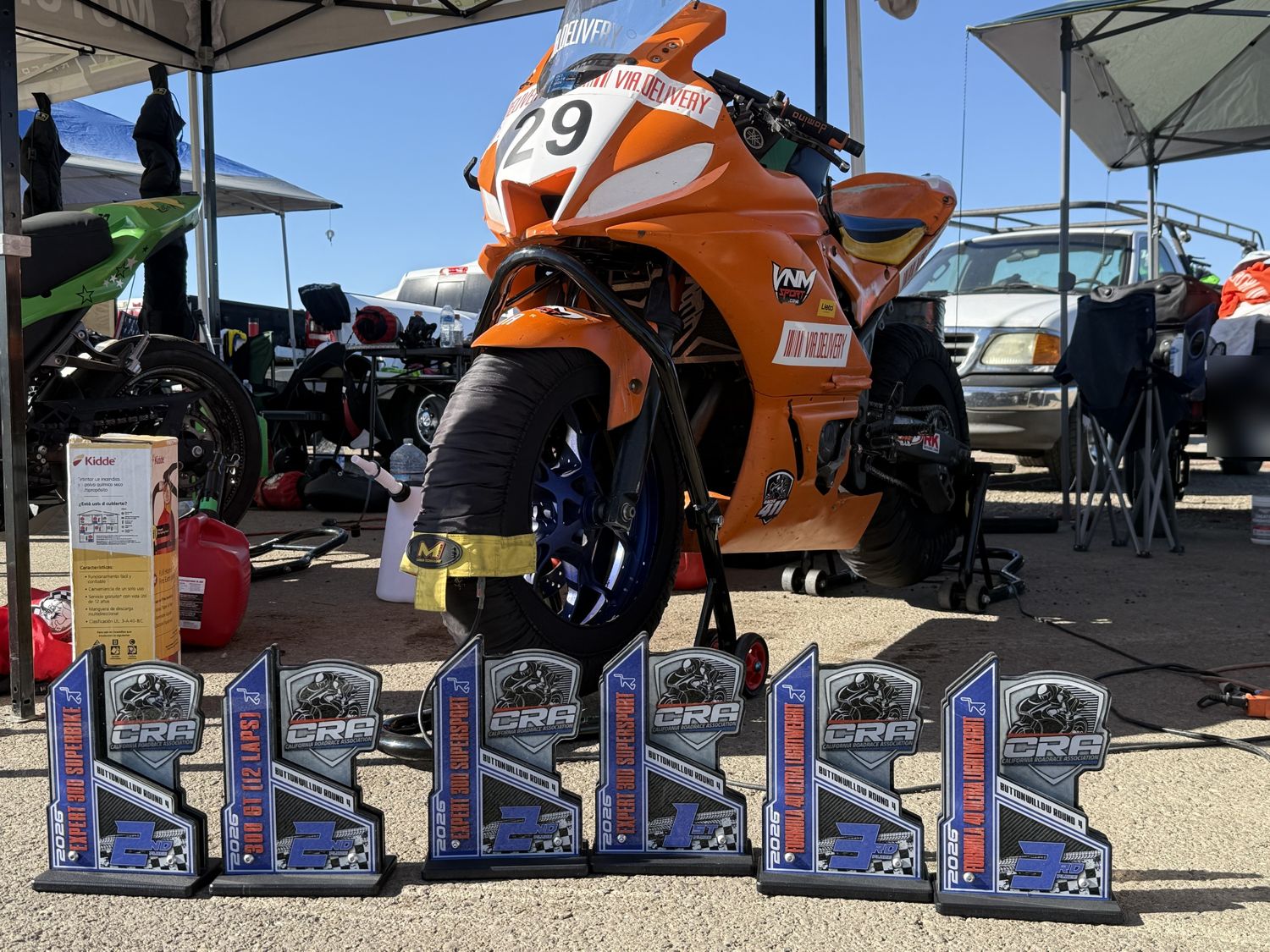
I came to Round 4 at Buttonwillow leading both CRA Expert 300 championships, Supersport and Superbike. That sounds comfortable until you read the small print: the finale paid double points. My rival, the fastest rider in the class and the man I had once asked to coach me, could still take both titles.
In Saturday's Supersport race I passed him and led for about four laps. Then the right clip-on came loose. You can't race hard holding a handlebar that moves, so I brought it home 2nd. It was a 2:02.202 lap, my best ever at that point, but the math was simple: to win the title I now had to beat him at least once.
I wheelied off the start and dropped places. Then I spent about four laps behind a 400 that was faster than my R3 on the straights. Once I got past it, the leader was in sight, and I chased him down.
On the last lap he came up behind a backmarker. I went for both of them in one move.
I led from Turn 4 to the checkered flag. That was enough.
The winning margin was 0.538 seconds. My last two laps were the fastest I have ever ridden:
Some of that time was found on foot. During race weekend I ran every evening, including a lap of the circuit itself. Walking and running Turn 10 showed me a later apex made more sense. In the deciding race my speeds through Turns 9 and 10 were the fastest I have recorded.
The Superbike race was simpler and much closer on paper. I finished 2nd behind my rival, and that was enough. The championship ended 101 to 100.
For about 30 days before this weekend I tried to get 1% better every day: running four or five times a week, riding something at least weekly, a new ECU tune, Öhlins fork inserts, shorter gearing, and no wine for the month. On race mornings: a short run, a warm-up on a small dirt bike, a near-far eye drill, and "Eye of the Tiger" on repeat. It sounds silly written down. It worked.
Next year the R3 retires, the Aprilia RS 660 arrives, and the target is the MotoAmerica Twins Cup at Laguna Seca, with Chad Stern (#71) alongside me. See the 2027 plan or come along as a partner.
Not a track day — real club racing, with numbers on the plates and a championship on the line. Here's what it actually costs, dollar by dollar.
How much does it actually cost to race motorcycles for a full season? Not a track day. Real club racing, with numbers on the plates and a championship on the line.
In three years I went from my very first race to 2026 CRA champion in both Expert 300 Supersport and Expert 300 Superbike, on a Yamaha R3. Along the way I kept track of what it costs just to show up and race.
Here's the answer up front: about $6,000–8,000 a year. When I started, I thought racing was way more expensive. It's not. Let me break down every dollar.
This is running costs only. No bike, no bike prep, no parts, no crash damage, no gear — those each get their own article. Just what it costs to get to the track and race. We'll do one race weekend first, then the whole season.
Entry is the biggest single cost. At CRA, the all-you-can-race pass is about $550. With one bike, I get about seven races out of it: two Supersport, one Superbike, two Formula 40, one GT 300 and one Formula Ultra Lightweight. That's about $80 a race.
You can buy single races for about $100 each, so two or three races costs less on paper. But the pass breaks even at around five or six races, and you're paying for practice, the transponder, travel and food (about $450–600) whatever you enter. Cutting races saves very little.
My advice: buy the pass. In your first year, seat time is everything. Your heart will be jumping out of your chest in your first few races, and the only cure is more races.
You need a transponder for timing. Renting one is about $65 a weekend. Buying one is about $400, so it pays for itself in roughly six weekends — under two seasons. I've been renting for years. Don't be me.
I strongly recommend the Friday practice day, even if you know the track well. It warms you up before the pressure starts. At Buttonwillow, the track's own Open Motorcycle Test Day is the lowest-priced option, around $160–180. Some track day organizers charge up to $280.
Running total so far: $775–895.
Tires depend on your bike and, honestly, on your pace. Here's what it looks like on an R3, on slicks. Run slicks from the start — you need to learn to trust them.
The faster you get, and the earlier you get on the throttle, the faster you eat rears. A beginner should expect one rear every two to three weekends — about $90–135 a weekend. At championship pace, about $400.
I burn about 10 gallons a weekend. For your first year or two, just use pump gas: you'll be the limiting factor, not the bike. At about $6 a gallon, that's $60. I switched to VP 101 race fuel for extra performance. It's about $13 a gallon at the Buttonwillow gas station, so about $130.
Change the oil every race weekend — you're revving the bike like there's no tomorrow. I use Mobil 1 10W-40 synthetic, two bottles at about $17 each, plus a filter. The filter must be the OEM Yamaha one: the club requires it, because aftermarket filters have failed and spilled oil on track. Get it from a Yamaha dealer or a race parts shop.
A good sign on the R3 that the oil is done: the bike pops out of fourth or fifth gear while you ride.
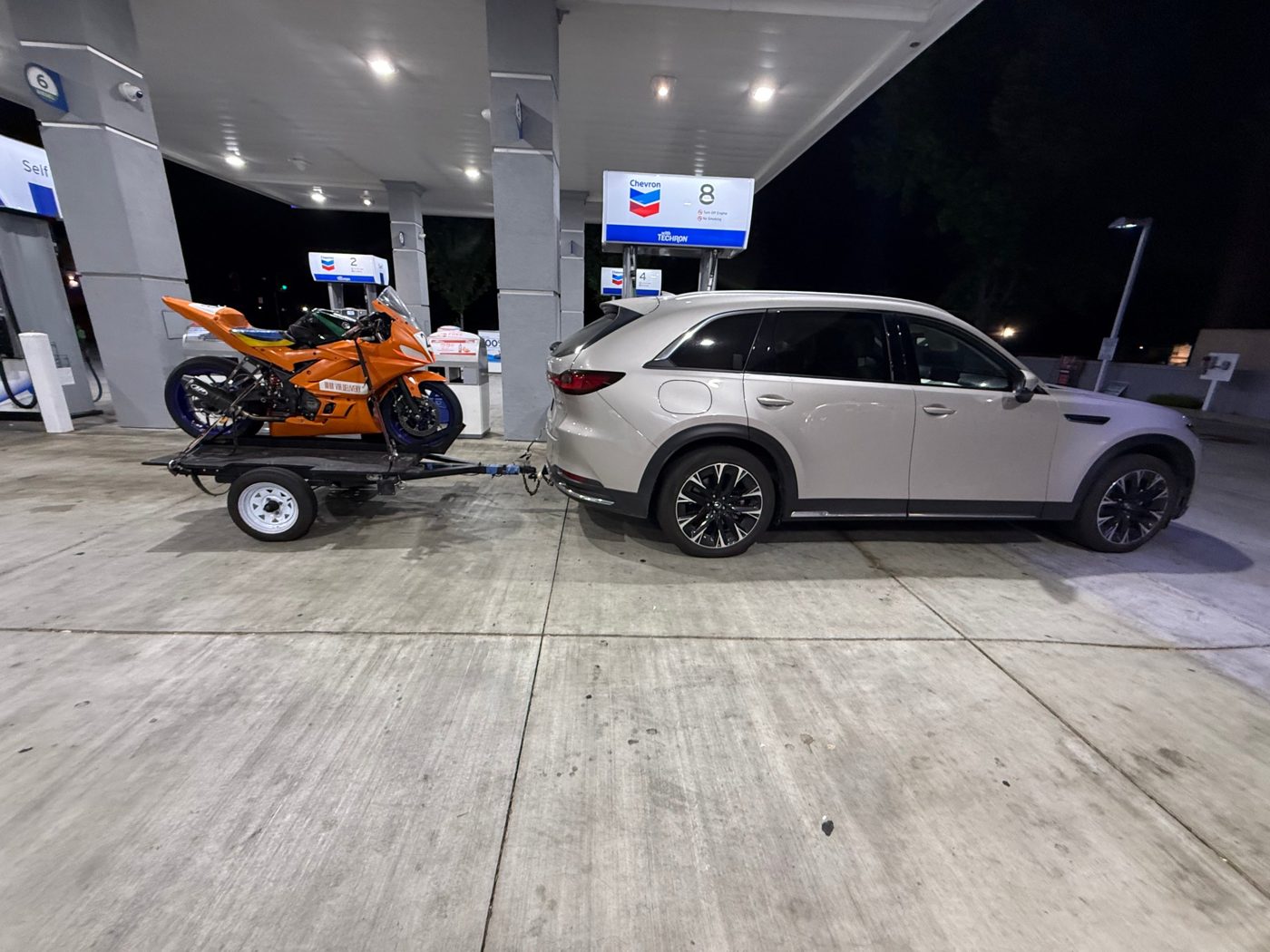
Club racing is local. I live in Menlo Park, and Buttonwillow is about three and a half hours away. I tow with the simplest trailer and still get 25–32 miles per gallon. Round trip, about $100 in gas.
You don't need a hotel or an RV. Almost everyone sleeps at the track. My first two years, I used a $100 tent with a comfortable cot and mattress, plus a sleeping bag for spring and fall. Now I sleep in my SUV on an air mattress. If it's February and freezing, sure, get a motel. Otherwise it's free, and honestly, it's part of the fun.
You're not that hungry on race days. Gas station food, the track cafe (a burger is $15–20), and sometimes the series puts on a free dinner. Bring a gallon of water from home. Call it about $45 a day for three days.
| Item | Beginner | Championship pace |
|---|---|---|
| Entry (all-you-can-race) | $550 | $550 |
| Transponder rental | $65 | $65 |
| Friday practice | $160–280 | $160–280 |
| Front tire (share of season) | ~$45 | ~$45 |
| Rear tire | $90–135 | ~$400 |
| Fuel | ~$60 (pump) | ~$130 (race fuel) |
| Oil change | ~$50 | ~$50 |
| Travel | ~$100 | ~$100 |
| Lodging | $0 | $0 |
| Food | ~$135 | ~$135 |
| Total | ~$1,250–1,450 | ~$1,600–1,750 |
A season is usually four to six rounds.
| 4 rounds | 6 rounds | |
|---|---|---|
| Beginner | ~$5,300 | ~$9,000 |
| Championship pace | ~$6,700 | ~$10,800 |
For most people starting out, that's about $6,000–8,000 a year — more once you're fighting for wins.
Prices as of 2026: approximate, in US dollars, from the 2026 club season in California.
Next in the series · Part 2 of 7What a Race Bike Really Costs (and Why I'd Buy a Yamaha R3)But first you need a bike.The most cost-efficient way to race is the smallest class. Here's which bike to buy, why you should buy it already built, and everything else you need to get it to the track.
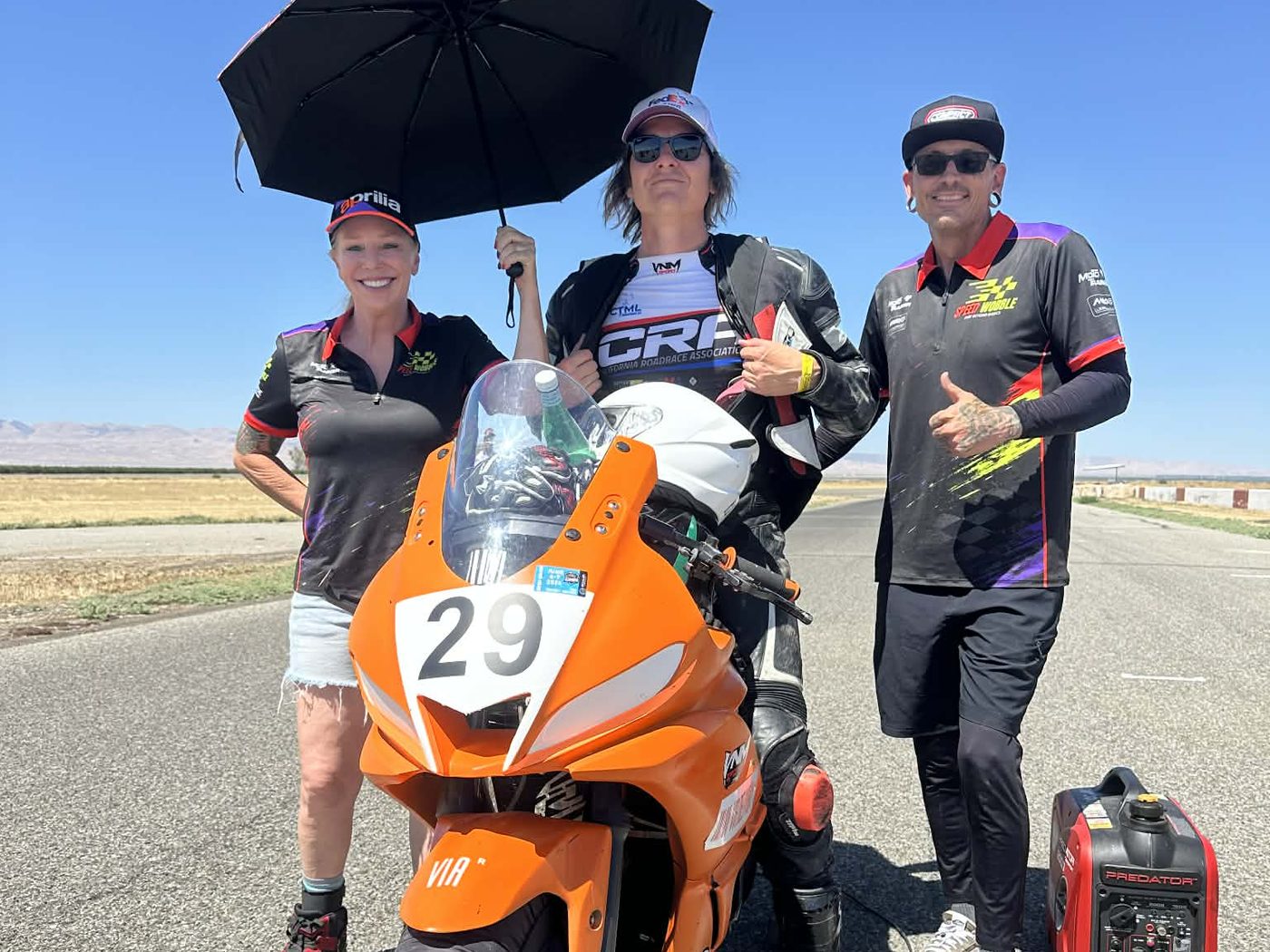
Most racers don't quit because of injuries or time. They quit because they can't afford it. So let's start with the biggest purchase: the bike, and everything you need to get it to the track.
The most cost-efficient way to race is the smallest class, for three reasons:
And the big one: tires, which can be the biggest cost of a race weekend. Riders on liter bikes change the rear every one or two races, and their tires cost more. On an R3, a beginner can make a rear last about half a season.
In 2026, I see three real options:
What about the Kawasaki Ninja 400? It races in the 400/450 cc class, depending on the series. All three bikes above are in the 300/350 cc class.
Just buy the R3.
My R3 was a 2016, half track-prepped, for $3,700. I put another $500–1,000 into it to make it race-ready. When I added up the parts on it, bike plus parts came to about $8,000 if you built it yourself.
So buy one that's already prepped. Race R3s go for $3,000–6,000.
And if you crash it badly? Worst case, another $3,000–4,000 and you have a new one. Most low sides cost far less (more on that in What a Crash Really Costs).
Don't touch the bike in year one. Until you're within five to seven seconds of the leader, the bike isn't your limit. You are.
Proof: I took my 130 hp ZX-6R to the same track, and I was five to seven seconds a lap slower than on my 40 hp R3.
Bike plus essentials: about $4,200–8,200.
Add a season of racing, and your whole first year is roughly $10,000–16,000, before gear.
Prices as of 2026: approximate, in US dollars, from the 2026 club season in California.
Next in the series · Part 3 of 7Cost-Efficient Race Gear: What I Wear and Where I Never Savethe last piece is gear — what I wear, what it costs, and the one thing I never save on.You'll crash, so every crash needs to be affordable. Expensive gear that ends your season is worse than sensible gear that keeps you racing. But a few things I never cut.
My rule for gear: you'll crash, so every crash needs to be affordable. Expensive gear that ends your season is worse than sensible gear that keeps you racing. But there are a few things I never cut.
I ride in a $150 helmet from Cycle Gear, Snell or ECE certified. People buy $600–1,000 helmets, scratch them in a small low side, and have to buy another one. Most low sides aren't head-first.
Two rules:
The one upgrade I think is worth it: MIPS rotational protection, which you can find for about $150–300.
And do the lean test in the store: tuck down flat, as if you're on the bike, then look ahead. If you can barely see what's in front of you, it's a helmet for upright or touring riding, not racing. My $600 Shoei is street-only for exactly that reason.
You can spend $4,000–5,000 on a custom suit. I bought an entry-level full leather suit at Cycle Gear for about $450. It's taken about ten crashes, the fastest around 80–90 mph, and I'm still patching it.
Used is even better value: $150–200 on Facebook Marketplace. I just got a near-new one for $150. Suits are consumables. Just make sure it fits and lets you move.
Yes, an entry-level suit is heavier. In year one, weight isn't your problem. Your riding is.
I wear a Helite tethered airbag vest over my suit. Mine was $500 used, about $900 new. It has a huge volume and holds your neck. Every time I've crashed, it fired. Maybe that's why I've never been seriously hurt.
A new cartridge is $35 and takes five minutes to swap. One weekend I crashed twice, swapped the cartridge twice, and had one of my best race weekends ever.
Some airbags cost $150–200 per deployment and have to be sent away. A vest also goes over any suit. Tethered or electronic is your call — mine has fired every time.
I still wear a back protector under the suit.
This is where I wouldn't buy low-end new. My first $150 boots needed duct tape every morning. Buy used high-end boots instead. I'm in Sidi race boots: $450–500 new, much less used.
Gloves are easy. My $70 gloves lasted six or seven crashes. My $200 pair isn't better. Look for thick leather.
Gear: about $1,300 buying smart (used where it makes sense), about $2,700 all new.
Prices as of 2026: approximate, in US dollars, from the 2026 club season in California.
Next in the series · Part 4 of 7What a Crash Really Costsyou've got the gear — but what happens when you actually crash?You can make every crash a fortune, or you can fix only what matters and keep racing. Here's what a low side actually costs — and the one cost you must plan for.
I'm kind of famous for crashing for breakfast. About two crashes a season on track days. Two or three in my first racing season. About seven in my second. And this season, the one I won? Zero on the big track.
All low sides, never a real high side. So I know what a crash costs.
You can make every crash a fortune: repaint every fairing, buy a new helmet, fix every scratch. Or you fix only what matters, and most crashes cost almost nothing. Your goal in year one isn't the best-looking bike. It's to keep racing.
Most low sides feel like sliding down an icy slope as a kid. (I grew up in Russia; I did a lot of that.) You're on your butt, and the bike slides ahead of you.
Safety first: don't run to your bike. Get off the track, as far as you can. Someone else might crash right behind you.
The crew brings you and the bike back to the paddock. Here's what you usually find:
Don't get obsessed with how the bike looks. The goal for the first year or two is maximum seat time, so you improve and don't quit because you can't afford it.
And please, don't go into debt to look cool in the paddock. Don't put a $2,000 suit and a $1,000 helmet on a credit card. If there's a less expensive way, even one that doesn't look as nice, that's the smarter way. Stay within your means.
Here's why it matters. From what I've seen, most club racers last two or three years, and the number one reason they quit is money — more than injuries, more than anything else. Two or three years is enough to win; I did it, with one year as an amateur and two in Expert. But you need to be able to keep going after that.
Typical low side, all in: about $50–100.
Could you total the bike — the YouTube kind, cartwheeling? Sure. On an R3, that's $3,000–5,000 for another bike, and you keep the old parts as spares. Crash a new Ducati V4 and you're looking at about $25,000.
None of the above includes medical costs. My rule: if you race, be financially ready to pay your health insurance's out-of-pocket maximum every year. Mine is $7,500.
Best case, you never use it. With all my crashes, I've had one doctor visit — $40, to check a bone — and that was at a kart track. But the money you saved everywhere else? Keep it ready for this. Spend smart everywhere, but never save on safety.
That's one more reason for the R3: lower speeds, and far fewer high sides than a liter bike with insane power.
Prices as of 2026: approximate, in US dollars, from the 2026 club season in California.
Next in the series · Part 5 of 7From 7 Crashes to Zero: What Actually Caused My Crashescrashing is part of racing, and on an R3 it's affordable. But better yet, crash less.I went back through every crash, and the result surprised me: most of them weren't about my riding at all.
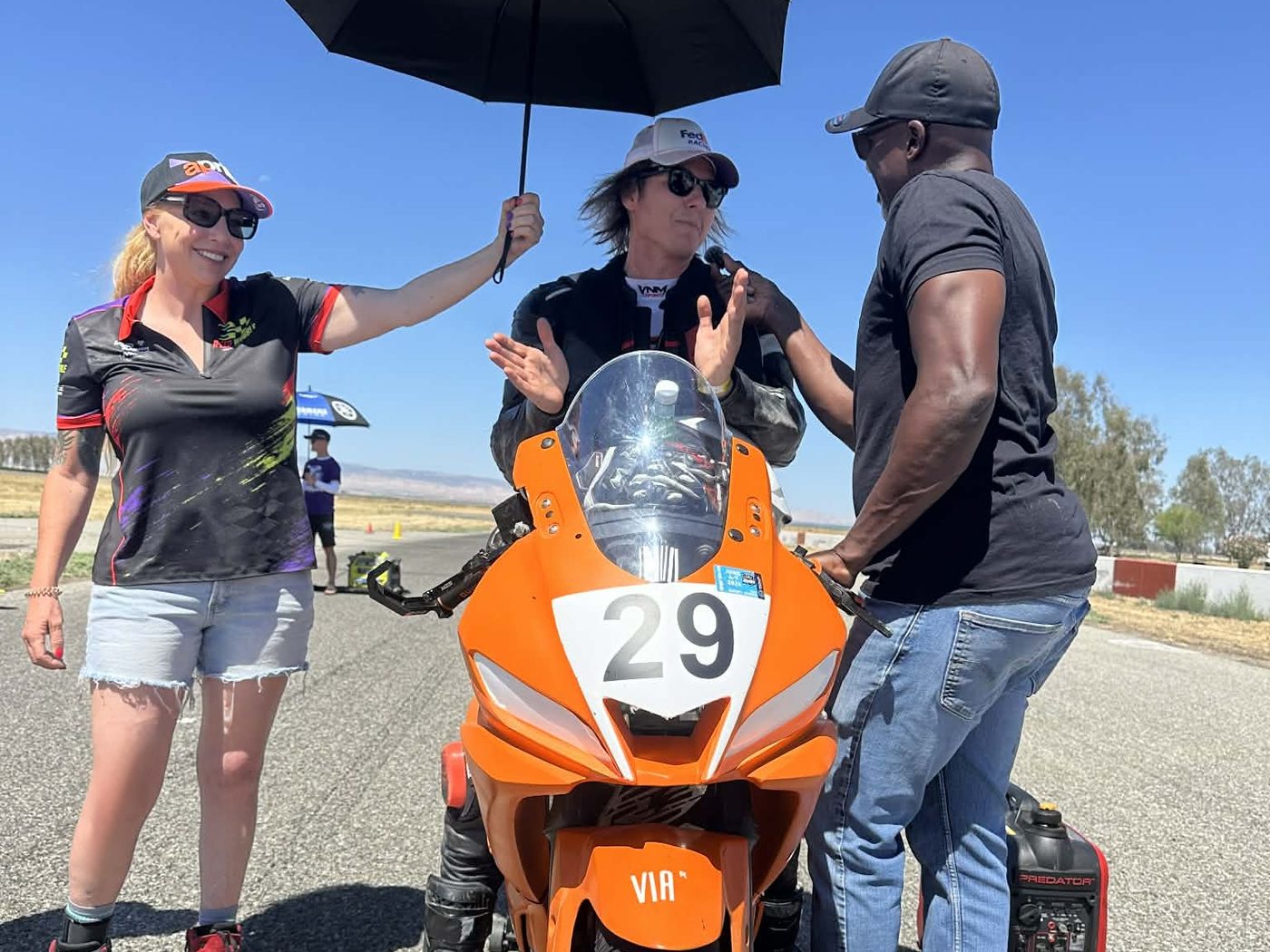
In my second racing season I crashed about seven times. In my third, the season I won, I didn't crash once on the big track. I went back through every crash, and the result surprised me.
Maybe 50–60% of my crashes weren't about my riding at all. They were mistakes in preparing the bike.
Nobody plans to go out on cold slicks. Here's how it happens.
My chain snapped between races. I was busy replacing it, the tire warmers were in the way, and I thought, it's probably fine. I was running late, went straight to the grid, no warm-up lap. First corner, I was deliberately slow and super careful. The rear went like I was on ice.
Another time I was working on the front of the bike and thought: the rear matters, the front doesn't, I'm not pushing that hard. Thunderhill, Turn 3 — the front was gone instantly.
Slicks aren't street tires. Street tires still grip a bit when cold. A slick compound only works in a narrow temperature range, and below it, it doesn't hold. Slicks and tire warmers go together. Always. That rule alone would have saved me four crashes.
I crashed once because my chain was too tight. A tight chain stops the swingarm from moving freely, so you run out of rear suspension very quickly. If you're choosing between slightly too loose and too tight, go slightly loose. A smiley chain is a happy chain — not too much slack, or it can snap or come off. But the worst thing is a tight chain.
Check your rear wheel alignment carefully. If the wheel isn't perfectly straight, the tire is always fighting sideways, and that eats into the grip you have for braking, cornering and acceleration.
With warm tires, the right chain tension and a straight wheel, a low side usually means one thing: too much throttle while still leaned over.
Between your throttle hand and the tire there's slack: the chain, the suspension, the tire itself. Go from 0 to 100% and all that slack runs out at the same instant. The rear gets a sudden kick instead of a smooth increase in load. That's when it goes.
The fix: 5% throttle first, then 100%. Crack it open a little, even mid-corner. The rear sits down a bit, and the chain, shock, swingarm and tire are all loaded. Now when you add throttle, there's no kick, just smooth acceleration — and on an R3 you can go right to 100% from there. (My ECU data says I actually open it more like 10–20% first. Same idea.)
I didn't change one specific thing to get to zero crashes. I learned to ride better. A lot of that happened on a small kart track, on small bikes. If someone local rents them out, try it.
For the first year or two, training makes you faster than any mod, and it stays with you forever.
You'd be surprised how often racers do it for free. We're not MotoGP. We love to share.
Ask one question: if I forget everything else, what's the one thing to fix? There might be ten, but you can only work on one at a time. And it's usually not body position. It's your eyes, or when you open the throttle.
My first coaching tip from a rider at the track: I was releasing the front brake too abruptly before the corner, which upset the front suspension. Release it in a more controlled way. I felt the difference immediately.
I used to do rally racing, and that's where I learned this. If you feel completely relaxed, like riding to work, you won't crash, but you're far from the limit. (And if you ride like that on public roads, stop.) If you're scared of what's happening around you, you're going too fast — above your limit — and you'll crash.
The best learning happens right on the edge, where you're just starting to feel scared. Take a step back. Then go slightly faster again. Ride at about 80%, not 100%. You'll be more relaxed, and often you'll actually go faster.
Your limits will grow. What scares you now won't scare you later. Look at the beginners' group: everything is scary for them. You were there too. Don't be afraid to crash — crashing means you're finding the limit. Keep the cost of a crash low, don't do stupid things, and keep training.
Then there are crashes you have zero control over. Once, at the start, a rider just hit me from the side. Another time I entered a corner and someone dive-bombed me from the inside. Could I have done anything? Not really. I've had about two like that. Welcome to the sport. Accept that it sucks.
But if you think another rider isn't riding safely:
At one round, a rider hit someone while overtaking in practice, then hit another rider in the race, then a third, and several racers complained. That's exactly when you report it.
This sport is dangerous enough. You want to race with people you can trust — people you can fight with by millimeters and know it's a fair fight. Race close. Race fair.
For me, bike prep caused the most crashes, then throttle technique. For you it might be something different, like target fixation, where your eyes lock onto what scares you. That deserves an article of its own.
Prices as of 2026: approximate, in US dollars, from the 2026 club season in California.
Next in the series · Part 6 of 7Maintain Your Own Race Bike (Plus My Pre-Race Checklist)more than half my crashes came from bike prep — so here's how to maintain your race bike properly without overpaying.Do your own work, do it properly, and you'll save money and crash less. Here's how — and the near-miss that almost cost me a championship.
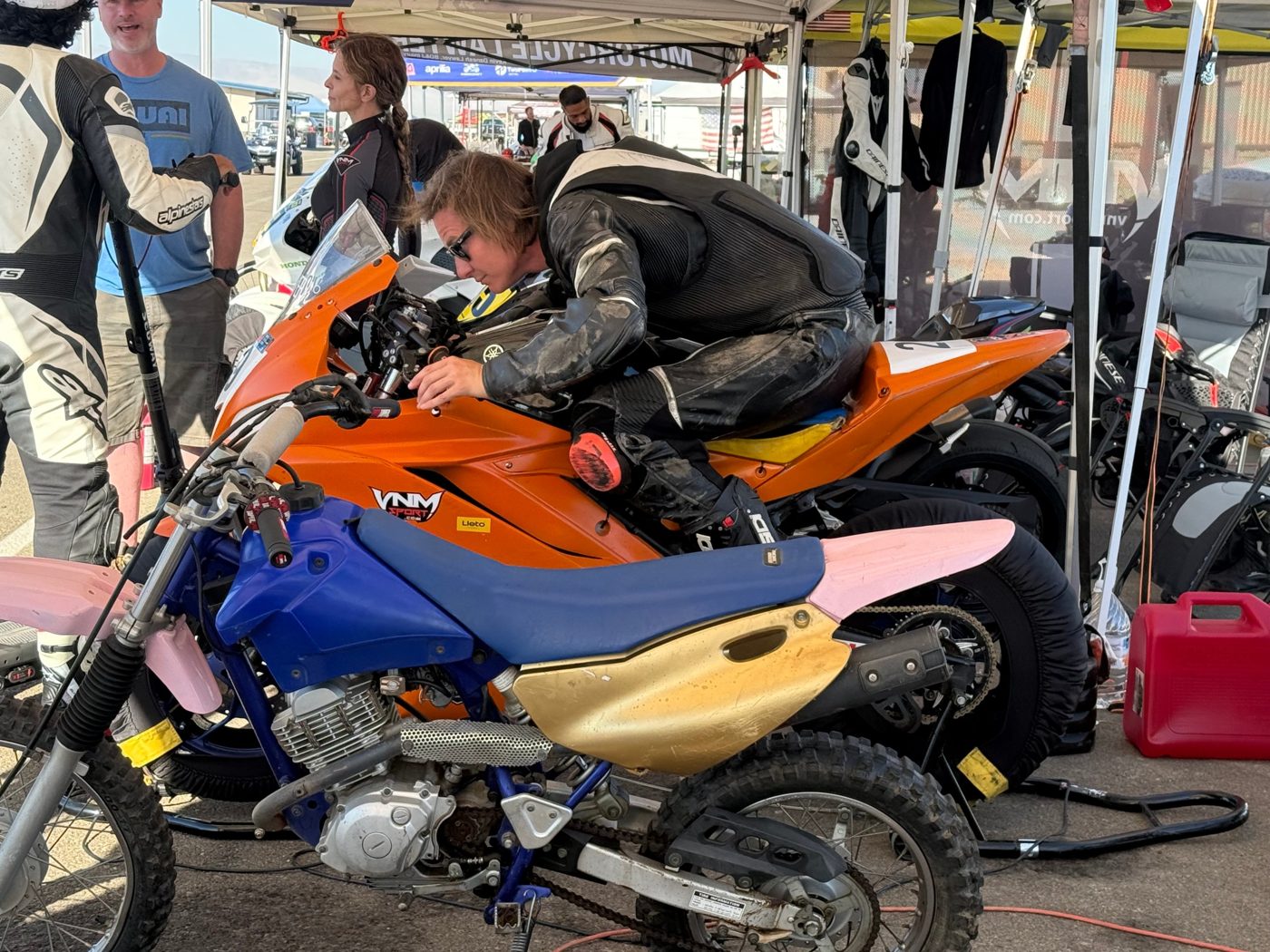
More than half of my crashes came from bike prep. So let's talk about how to maintain your race bike — properly, and without overpaying.
You can pay a race team or a shop and hope they do a professional job. At club level, I haven't seen that work well:
Another racer and I were talking recently, and between us we came up with a lot of examples of so-called professionals getting it wrong. If you do use a shop, know exactly what they're doing and how it works before you commit.
Better: do it yourself. If you're even a little mechanical, great. If not, it's easy to learn. It's not rocket science, and it's much easier than working on a car. There's a YouTube video for almost everything, and almost every mod has an install video. And it's actually fun.
Something I learned in rally racing: if you do a job, do it until you know it's done well. Don't pile up jobs that are almost done, where you think, ah, it's probably okay. They add up, one after another, and then you get a chain reaction of everything falling apart — and you have zero control.
Even after all these years, it happened to me. The weekend I won two championships, Saturday race, I was leading. Fast corner, I pushed on the handlebar, and the clip-on moved forward on the fork by itself. I'd worked on the forks before the race. Two bolts on the other side were a pain to get to, and I thought, I didn't touch those, they're fine. They weren't. It almost caused a crash, and a crash there would have cost me the championship, not just an injury. And don't assume it wouldn't happen with a seasoned shop professional. It does.
All you need is two stands, a small garage and a handful of tools. You don't need premium tools; Harbor Freight is fine. But keep everything organized. Every tool goes back exactly where it was, so next time you find it straight away. It makes the work far easier and more enjoyable.
Do the basic mechanics yourself and you'll save a lot of money. Surprisingly often, you'll also do a better job than a shop professional who just doesn't care.
You can even swap the whole engine on an R3 yourself. No special tools, nothing crazy. I've done it. It takes a couple of evenings, but swapping the engine without going inside it isn't a big deal. You don't need a shop.
Two things I don't do myself. If you know how, go for it.
It doesn't take long to check all this before a race weekend, and it's worth it. Front to back:
And the most important item: what's left over from the last race. After a weekend you usually know what needs doing. Write it down on the drive home — voice notes on your phone, without getting distracted from driving. Then work through the whole list well before the next race. The small things that catch up with you at the last moment are the worst.
The R3 is very reliable, as long as you don't ride it into something.
Prices as of 2026: approximate, in US dollars, from the 2026 club season in California.
Next in the series · Part 7 of 7Training That Pays Off: How to Get Faster Without Buying Modsmods won't make you faster in your first year or two — training will.Mods won't make you faster in your first year or two. Training will, and it stays with you forever. Here's every way I train, and what it costs.
Mods won't make you faster in your first year or two. Training will, and it stays with you forever. Here's every way I train, and what it costs.
End of my second season. A new rider, Marc Lo, shows up from another club and he's killing it — first place everywhere. I was slow that season, partly because one cylinder had no compression and it took me too long to figure that out. Was it me? The bike? I swapped the engine, and he was still way faster.
So instead of thinking "I'll beat this guy anyway," I thought: he's so good, why not ask him? I walked up and asked whether he could coach me a little. In MotoGP they might laugh at you. In club racing, Marc said yes, and told me how he trains: small bikes on a kart track.
Find the fastest rider. Ask.
Marc trains on VMC Racing mini bikes at a kart track. Before I asked him, I had no idea he was doing it — that's why you ask around. A mini bike costs far less to ride and far less to crash, and every wrong technique gets magnified, so you see it straight away.
If you're in California, get in touch and I can point you in the right direction. If you're elsewhere in the country or the world, ask your local racers where they train.
My first session was a huge eye-opener. My inside arm was too stiff and I couldn't turn the bike. I relaxed it, dropped the elbow, and it just clicked. By then I'd ridden on the street for 15 years, done two years of track days and two years of racing.
Think you've got nothing to learn? MotoGP riders learn something every day. And who taught you the basics? The license course teaches you to ride safely, maybe to look where you're going. Not to ride fast. You might get some things right, but you have no idea how many you're doing wrong.
Then I dragged my elbow for the first time. The next session, I couldn't. I asked Marc why. He said: you don't need your knee way out all the time. Keep it closer to the bike and you can lean more. It turns out knee-down is overrated; the fastest riders don't always have it down. Don't worry about it in year one or two.
On small bikes, everything is easier to learn: 5% throttle first, sliding the rear without panicking, where to look, how to turn.
Cost: about $250 for a full day, bike and track included. Or buy your own small bike, such as a used Kawasaki KX65, for around $1,000.
One warning: they're not toys. Low sides are usually gentle, and I never used to wear my airbag there. Last time, I lost the front and hit my shoulder hard. Another rider crashed in the same corner and broke his collarbone. Now I wear the airbag. A $35 cartridge costs far less than a broken collarbone.
New for me this year. On dirt, the rear slides in a softer, more controlled way, so you stop being scared of that feeling. I got a Yamaha TTR 125 from a racing friend for about $150, plus about $200 in parts. My daughter rides it too, and I ride it in the pits to warm up before races. It's great for practicing small things without the big bike.
Just riding track days is good. Better: every time, pay someone a little, or ask someone who works there, to follow you for a lap or a session and give you one thing to improve. Ideally someone on a small bike — liter-bike riders ride differently. Someone on a similar bike is gold.
Your competitors become your best friends at the track (unless somebody's being a jerk). After a race or a practice session, ask someone in your class: where are you catching me? Which corners should I do better? It's not in their interest to tell you, but nobody has ever refused me. And if someone asks you, don't hold back. Tell them what you saw.
This is club racing. There's so much time left in every lap. You help them, they help you, you build friendship and trust, and you both get faster.
Amateurs: go ask the experts. They're not racing you this season. If you run a 2:01 and someone running a 2:10 asks for advice, you don't see a threat. You see yourself a year ago. You might even ride a session with them, or walk them through the track corner by corner.
Ask your rivals. Answer your rivals.
You probably already ride twisty roads on your street bike. You'll realize quickly that you can't go at race pace there: no slicks, cars, corners you don't know, sand, and the law. And when you crash on a track, there's flat runoff. In the forest, there's a tree. Even an airbag won't save you. Never ride at race pace on public roads.
But you can practice one element at a reasonable speed:
You don't need your knee down or to break the speed limit for any of that. You're building muscle memory. One element per ride, within the law and within your margins.
Obviously not on your race bike — it's fully race-prepped. And don't try to make one bike both a race bike and a street bike. It never works. Have a separate street bike. It doesn't have to be a sport bike. I train on an ex-police Kawasaki Concours, heavy as hell, with hard bags on the back. You'd be surprised how much you can practice on it — pretty much everything above.
Twisties are about safety, one element at a time, and enjoying it. Don't forget why we got into this: we love riding. Sometimes just go out, not fast, and feel it — why it's so cool, and how much you've learned.
Kart track and mini bikes, a small dirt bike, track days with feedback, your rivals, and one element at a time on the street. Most of it costs little, and none of it needs your race bike.
Prices as of 2026: approximate, in US dollars, from the 2026 club season in California.
Start of the series · Part 1 of 7What It Really Costs to Race a Club Motorcycle SeasonThat's the whole series. Start again from the running costs of a season.